Showing posts with label Australia. Show all posts

13 May 2021

WORSE THAN THE DREYFUSS AFFAIR: THE PERSECUTION OF JULIAN ASSANGE

12 May 2021
Worse Than the Dreyfuss Affair: the Persecution of Julian Assange
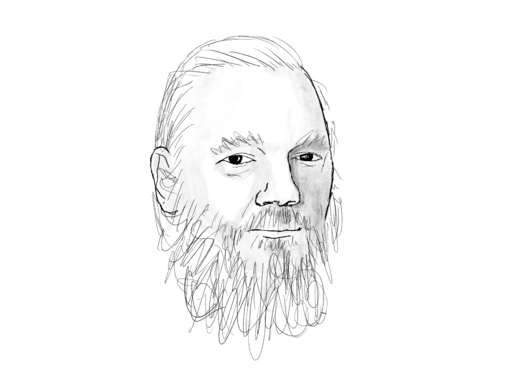
by Alfred de Zayas
Drawing by Nathaniel St. Clair

It may appear unnecessary to repeat the truism that democracy depends on transparency and accountability, and yet, how often has the democratic order been betrayed by our leaders in the recent past? How often have the media abandoned their watchdog function, how often have they simply accepted the role of an echo-chamber for the powerful, whether government or transnational corporations?

Among the many scandals and betrayals of democracy and the rule of law we recognize the persecution of inconvenient journalists by governments and their helpers in the media. Perhaps the most scandalous and immoral example of the multinational corruption of the rule of law is the “lawfare” conducted against Julian Assange, the founder of Wikileaks, who in the year 2010 uncovered war crimes and crimes against humanity committed by the United States and its NATO allies in Afghanistan and Iraq.

In a world where the rule of law matters, these war crimes would have been promptly investigated, indictments would have been issued in the countries concerned. But no, the ire of the governments and the media focused instead on the journalist who had dared to uncover these crimes. The persecution of this journalist was a coordinated assault on the rule of law by the United States, United Kingdom and Sweden, later joined by Ecuador. The instrumentalization of the administration of justice – not for purposes of doing justice, but to destroy a human being pulled more and more people into a joint-criminal conspiracy of defamation, trumped-up charges, investigations without indictment, deliberate delays and covers-up.

In April 2021 my colleague, Professor Nils Melzer, the UN Rapporteur on torture, published a meticulously researched and methodically unassailable documentation of this almost incredible saga. His book, The Case of Julian Assange (Piper Verlag, München 2021), can well be called the “J’accuse” of our time, reminding us how our authorities have betrayed us, how four governments colluded in the corruption of the rule of law. Like Emile Zola, who in 1898 exposed the web of lies surrounding the scandalous judicial framing of the French Colonel Alfred Dreyfuss in France, Nils Melzer shocks us 122 years later with proof of how countries that are ostensibly committed to the rule of law and human rights can betray the democratic ethos with the complicity of the mainstream media. Melzer writes about “concrete evidence of political persecution, gross arbitrariness on the part of the administration of justice and deliberate torture and abuse.”

This is an enormously important book because it requires us to abandon our “comfort zone” and demand transparency and accountability from our governments. Indeed, it is scandalous that none of the four governments involved in the frame-up cooperated with Professor Melzer and only answered with “political platitudes.” Me too, I experienced the same lack of cooperation from powerful countries to whom I addressed notes verbales concerning violations of human rights – none of them responded satisfactorily.

Melzer reminds us of Hans-Christian Andersen’s fable “The Emperor’s new clothes”. Indeed, everyone involved in the Assange frame-up consistently maintains the illusion of legality and repeats the same untruths, until an observer says – but the emperor has no clothes! That is the point. Our administration of justice has no clothes and instead of advancing justice, it colludes in the persecution of a journalist, with all the implications that this behaviour has for the survival of the democratic order.

Melzer convinces us with facts that we are living in a time of “post-truth”, and that it is our responsibility to correct this situation now, lest we wake up in a tyranny.

Alfred de Zayas is a professor at the Geneva School of Diplomacy and served as a UN Independent Expert on the Promotion of a Democratic and Equitable International Order 2012-18.

08 September 2020

THE STALINIST TRIAL OF JULIAN ASSANGE

 CounterPunch 7

Drawing of Julian Assange by Nathaniel St. Clair

Having reported the long, epic ordeal of Julian Assange, John Pilger gave this address outside the Central Criminal Court in London on September 7 as the WikiLeaks Editor’s extradition hearing entered its final stage.

When I first met Julian Assange more than ten years ago, I asked him why he had started WikiLeaks. He replied: “Transparency and accountability are moral issues that must be the essence of public life and journalism.”

I had never heard a publisher or an editor invoke morality in this way. Assange believes that journalists are the agents of people, not power: that we, the people, have a right to know about the darkest secrets of those who claim to act in our name.

If the powerful lie to us, we have the right to know. If they say one thing in private and the opposite in public, we have the right to know. If they conspire against us, as Bush and Blair did over Iraq, then pretend to be democrats, we have the right to know.

It is this morality of purpose that so threatens the collusion of powers that want to plunge much of the world into war and wants to bury Julian alive in Trumps fascist America.

In 2008, a top secret US State Department report described in detail how the United States would combat this new moral threat. A secretly-directed personal smear campaign against Julian Assange would lead to “exposure [and] criminal prosecution”.

The aim was to silence and criminalise WikiLeaks and its founder. Page after page revealed a coming war on a single human being and on the very principle of freedom of speech and freedom of thought, and democracy.

The imperial shock troops would be those who called themselves journalists: the big hitters of the so-called mainstream, especially the “liberals” who mark and patrol the perimeters of dissent.

And that is what happened. I have been a reporter for more than 50 years and I have never known a smear campaign like it: the fabricated character assassination of a man who refused to join the club: who believed journalism was a service to the public, never to those above.

Assange shamed his persecutors. He produced scoop after scoop. He exposed the fraudulence of wars promoted by the media and the homicidal nature of America’s wars, the corruption of dictators, the evils of Guantanamo.

He forced us in the West to look in the mirror. He exposed the official truth-tellers in the media as collaborators: those I would call Vichy journalists. None of these imposters believed Assange when he warned that his life was in danger: that the “sex scandal” in Sweden was a set up and an American hellhole was the ultimate destination. And he was right, and repeatedly right.

The extradition hearing in London this week is the final act of an Anglo-American campaign to bury Julian Assange. It is not due process. It is due revenge. The American indictment is clearly rigged, a demonstrable sham. So far, the hearings have been reminiscent of their Stalinist equivalents during the Cold War.

Today, the land that gave us Magna Carta, Great Britain, is distinguished by the abandonment of its own sovereignty in allowing a malign foreign power to manipulate justice and by the vicious psychological torture of Julian – a form of torture, as Nils Melzer, the UN expert has pointed out, that was refined by the Nazis because it was most effective in breaking its victims.

Every time I have visited Assange in Belmarsh prison, I have seen the effects of this torture. When I last saw him, he had lost more than 10 kilos in weight; his arms had no muscle. Incredibly, his wicked sense of humor was intact.

As for Assange’s homeland, Australia has displayed only a cringeing cowardice as its government has secretly conspired against its own citizen who ought to be celebrated as a national hero. Not for nothing did George W. Bush anoint the Australian prime minister his “deputy sheriff”.

It is said that whatever happens to Julian Assange in the next three weeks will diminish if not destroy freedom of the press in the West. But which press? The Guardian? The BBC, The New York Times, the Jeff Bezos Washington Post?

No, the journalists in these organisations can breathe freely. The Judases on the Guardian who flirted with Julian, exploited his landmark work, made their pile then betrayed him, have nothing to fear. They are safe because they are needed.

Freedom of the press now rests with the honourable few: the exceptions, the dissidents on the internet who belong to no club, who are neither rich nor laden with Pulitzers, but produce fine, disobedient, moral journalism – those like Julian Assange.

Meanwhile, it is our responsibility to stand by a true journalist whose sheer courage ought to be inspiration to all of us who still believe that freedom is possible. I salute him.

John Pilger can be reached through his website: www.johnpilger.com

18 March 2020

SOUTH AFRICA - APARTHEID POLICE STATE; AUSTRALIA - APARTHEID POLICE STATE; ISRAEL - APARTHEID POLICE STATE

HOTEL HELL FOR REFUGEES


Headline on front page of Preston Leader on Tuesday 10 March 2020 (This is a Murdoch paper!!! )

Whatever happened to our so-called democracies?

Starting with South Africa, the world waited with bated breath for dramatic changes when Nelson Mandela became the first black president of a united South Africa and possibly the end of apartheid - and the police state.

Mandela retired after his first and only 5-year term as president - he was, of course, quite elderly by then and after the criminally hard life he had had in South Africa's infamously dreadful prison on Robben Island, he rightly thought a younger generation should govern for South Africa.

He  wrongly favoured Thabo Mbeki who was disastrous during his periods as president because he was an AIDS denier to the extent that even today, a few presidents later, HIV/AIDS still presents a major health challenge for the South African people.

A little later Jacob Zuma became president and corruption set in, with disastrous results for the economy and all other facets of South African life.

One of the disasters of this period was the Marikana massacre of many miners who had gone on strike because of the murderous mismanagement of the company owning certain mines.

The person who is now the president, Cyril Ramaphosa, was apparently the person who ordered the police and the army to open fire on the miners. In an earlier incarnation he had been the president of the organisation Congress of South African Trade Unions (COSATU). Then he became a business man and also very rich.

Disaster all the way, and the rich got richer and the poor poorer - if possble -  and South Africa still remains a mess - in 2020.

I arrived in Australia from South Africa in 1978, hoping apartheid and police state would not be as bad as in South Africa.

Idle hope! After all, apartheid started in Australia on 26 January 1788 and the nature of the British colonisation of Australia was that it was already a police state. Instead of improving over the years, the police state has intensified to the extent that asylum seekers managing to get to Australia - escaping mostly from brutal regimes around the world and arriving here to ask for asylum, hoping to have peace in their lives, are locked up in concentration camps from which escape is virtually impossible.

Some slightly more humanitarian politicians - and they are few and far between in Australia - managed to pass legislation to bring refugees to Australia from the concentration camps on Manus and Nauru for medical treatment.   This legislation was overturned by the government as soon as it was possible, and 55 asylum seekers have been locked up in a Mantra Hotel in Preston in Melbourne for the last 8 months with no chance of any relief in sight and no hope of change from a government and opposition determined to follow a police state mentality of locking people in concentration camps and throwing away the keys.

What is mostly ignored by most white Australians and many migrants in the last 200 years or so is that the indigenous inhabitants of this ancient country are still treated like savages in their own land and they are imprisoned at alarming rates where they are also suffering deaths in custody by a brutal police regime determinedly maintained by the police state governments of the country.

Some of those of us who have experienced the "joys" of living in a police state despair of any changes in Australia because so many people behave like sheep and also can - or won't be bothered with making any sorts of protests and leaving the rest of us with that hopeless feeling that there is never going to be any changes - ever!

At the age of 93 I thought I had seen and experienced most of the worst aspects of human nature but the longer I live the worse it gets - and I haven't spoken about Israel yet.

Israel is not only a police state, but one with fascist tendencies. Israelis resent being compared to the Nazis but most of what they are doing to keep the Palestinians under control is to keep them incarcerated in their concentration camps in Gaza and the West Bank on land stolen from them by the zionist settlers. Even those Palestinians who were and are in Israel as citizens of their own land are treated like second or third class citizens without full citizens' rights because the zionist project is to occupy the rest of Palestine which has some old Jewish names - Judea and Samaria - for them called after some of the old tribal groups of a few thousand years ago.

Israel wants a Jewish state and if that is what they want, Israel under no circumstances can be called a democracy - it hasn't been that for most of its existence - but a theocracy similar to Iran and other  similar religious states.

.........and Israel is the propagator of much of the anti-semitism in the world in the 21st century.

29 December 2019

THE DECENT PROTESTER: A DOWN UNDER CREATION


From CounterPunch -  22 October 2019

By Binoy Kampmark

The Decent Protester, appropriately capitalised and revered is, from the outset, one who does not protest. It is an important point: to protest in the visage of such a person is an urge best left to inner fantasy and feeling. You come late to the scene: the best work and revolt has been done; the people who made the change are either dead, in prison, or ostracised. Modest changes might be made to the legal system, if at all.

To actually protest, by which is meant screaming, hollering, and disrupting, with the occasional sign of public indignation, is something of a betrayal. A betrayal to your comfortable station; a betrayal to your happy state of affairs. Show disgust, but keep it regular, modest and contained. Add a dash of bitters that amount to hypocrisy.

This regularity is something that ensures the continuation of police states, apartheid regimes, and vicious rulers. It also perpetuates the status quo in liberal democracies. The cleverness of this is the idea of permissible revolt: As long as you operate within the acceptable boundaries of protest, your conscience is given its balm, and the regime can continue to hum to the tune of the tolerable. It is a principle that states of all political hues adopt, though the degree of that adoption is sometimes moderated by bills of rights and the like.
When Henry D. Thoreau was arrested and found himself spending a night in a Concord prison in 1846 for refusing to pay his poll tax, he was making a broader statement about breaking rules, albeit from a selfish perspective. His objects of disaffection were slavery and the Mexican War. To the individual exists a conscience that should not bow to majoritarian wishes. If there is a law “of such a nature that it requires you to be an agent of injustice to another,” he writes in Civil Disobedience, “then, I say, break the law.” In Walden (1854), he elaborated on the point, claiming that no citizen “for a moment, or in the least degree, resign his conscience to the legislation.”

This view has hardly gone unchallenged, suggesting that civil disobedience can be a slippery matter. Hannah Arendt cast more than a heavy stone at Thoreau in her own essay on the subject in The New Yorker in September 1970. Her proposal, instead, was the necessary need to institutionalise civil disobedience and render it a matter of recognised action, rather than individual abstention. Thoreau had, after all, suggested distance and the will of the individual, that it was “not a man’s duty, as a matter of course, to devote himself to the eradication of any, even to the most enormous wrong; he may still properly have other concerns to engage him; but it is his duty, at least, to wash his hands of it…”

To that end, Arendt felt that “it would be an event of great significance to find a constitutional niche for civil disobedience – of no less significance, perhaps, than the event of the founding of the constitutio liberatis, nearly two hundred years ago.” But she resists, curiously enough, the idea of legalising it, favouring a political approach akin to treating the protester as a registered lobbyist or special interest group. “These minorities of opinion would thus be able to establish themselves as a power that is not only ‘seen from afar’ during demonstrations and other dramatizations of their viewpoint, but is always present and to be reckoned with in the daily business of government.”

Few countries better exemplify this dilemma than Australia, a country that has no formal constitutional protection of the right to protest yet insists on a collaborative model between protestor and state (protest permits, for instance, take precedence over any organic right; cooperating with police is encouraged, as laws are to be abided by). In some ways, an argument might well be made that civil disobedience, in anaemic form, has been institutionalised down under.
The result from brought forth in this coagulation is simple if compromising: the Decent Protester. Such a person is one very much at odds with the barebones definition of civil disobedience advanced by Robin Celikates, who describes it as “intentionally unlawful protest action, which is based on principles and aims at changing (as in preventing or enforcing) certain laws or political steps.” In other words, there can be no Australian Rosa Parks.

Each state has its own guidelines for the decent protester, offering a helpful hand for those braving a march or organising a gathering. An information booklet covering the right to protest in the Australian Capital Territory has a range of “guidelines”. It speaks of “many public places” in Canberra, the national capital, “where people can exercise their right to communicate their opinions and ideas through peaceful protests and demonstrations.” The authors of the booklet make the claim that Australian “democracy recognises this right which is subject to the general law and must be balanced against the rights and interests of others and of the community as a whole.”

The Commonwealth Attorney-General’s office gives the false impression that Australia has a clear right to peaceful assembly for people to meet and “engage in peaceful protest.” A list of international human rights treaties are suggested as relevant, including the International Covenant on Civil and Political Rights (articles 21 and 22) and the International Covenant on Economic, Social and Cultural Rights (article 8(1)(a)). But being a party to a convention is not the same as incorporating it. Legislation needs to be passed and, for that reason, remains mediated through the organs of the state. The Fair Work Act 2009, for instance, protects freedom of association in the workplace but only in the context of being, or not being, members of industrial associations. Not exactly much to go on.

Other publications venture a much older right to protest, one that came to the Great Southern Land, paradoxically enough, with convict ships and manacles. “The origins of the common law right to assembly,” argues a briefing paper by Tom Gotsis for the NSW Parliamentary Research Service, “have been traced back 800 years to the signing of the Magna Carta.” This, in turn, finds modest recognition in state courts and the High Court of Australia, not least through the limited implied right of political communication. Ever eccentric in its conservatism, that right is not a private one to be exercised against the state, merely a control of hubristic parliaments who venture laws disproportionate to it. Not exactly a glorious, fit thing, is that implied right.

Such protest, measured, managed and tranquilised, makes the fundamental point that those who control the indignation control the argument. Much time has been spent in Australia embedding police within the protest structure, ensuring that order is maintained. Trains, buses and cars must still run on time. People need to get to work. Children need to be in school. The message is thereby defanged in the name of decency. It also means that genuine lawbreaking aimed at altering any policies will frowned upon as indecent. Good Australians would never do that.

More articles by:
Binoy Kampmark was a Commonwealth Scholar at Selwyn College, Cambridge. He lectures at RMIT University, Melbourne. Email: bkampmark@gmail.com

17 December 2019

CENSORSHIP IN AUSTRALIA - KAFKA DOWN UNDER: THE THREAT TO WHISTLEBLOWERS AND PRESS FREEDOM IN AUSTRALIA


Kafka Down Under: the Threat to Whistleblowers and Press Freedom in Australia


It was the head of the Australian Cyber Security Centre who finally admitted before an Australian Parliament committee that she had unilaterally directed and pressured CyberCon to drop myself and an academic research professor (an Australian citizen) from the University of Melbourne as speakers.

I viewed the extraordinary pressure exerted by the Australian Cyber Security Centre to block me as an already-accepted speaker — a week before the start of a high visibility public interest conference on cybersecurity — as a most alarming and Orwellian development and a distinct form of brazen censorship for the express purpose of outright silencing me.

The head of the ACSC misled the committee when she said the reason she wanted my talk canned was because of a proposal for me to participate on a panel with Edward Snowden that never went forward.

It appears she dissembled and used the apparent floating of the idea of a proposed Edward Snowden panel (for which I had NO prior knowledge whatsoever) as a convenient foil and cover to justify and excuse the barring of me as a speaker from CyberCon with the very heavy hand of her “higher authority” as the head of the ACSC over the conference organizers (Australian Information Security Association).

In addition, the reason she gave before the committee is not the reason given to me when I formally followed up with the AISA organizers.

On 29 September (4 days before I departed the United States), I received an e-mail message to contact the Board Director for AISA “as a matter of urgency.”
In a subsequent phone call from the same AISA Board Director, I was told that I was no longer a speaker on the conference agenda, but I could still attend the conference as a delegate and that they (AISA) would honor the flight and accommodations arranged for me many months early.

I followed up formally and asked for the specific reason I was dropped as a speaker from CyberCon. I was informed on 7 October, in an e-mail from the Board Director of AISA, that “AISA works with a conference partner in respect of CyberCon. Our conference partner has determined your presentation is incongruent with the conference.”

Furthermore, this egregious canning of me as a speaker fed right into the current debate in Australia about press freedom and whistleblowing laws because their public interest disclosure process (their legal way for public servants to blow the whistle) has been described as “impenetrable” by their Federal Court.

The current debate in Australia regarding press freedom and whistleblowing laws strikes at the heart of any country claiming it is a democracy.

The recent raids by the Australian government against major media outlets and whistleblowers have broken open the tension — between openness and transparency versus secrecy and closed-door government too often hiding itself (and its actions) away from accountability and the public interest.

Something has to give. The debate centers on the public interest knowing what the government is doing behind closed doors and often in secret in the name of — and under the veil and banner of — national security.

The dramatic 21 October Right to Know campaign — with the redacted front pages on all major newspapers in Australia as I woke up in Melbourne before returning to the United States that very day — demonstrates beyond the shadows of secrecy, censorship and press suppression that sunshine is the best antidote for a healthy and robust democracy increasingly held hostage by the national security state.

Efforts from on high seek to justify the actions of that national security state under the color of public safety for more and more autocratic powers — while stoking fear and hyping the danger to society — yet going after whistleblowers who disclose actions that clearly rise to the level of wrongdoing, violations of law, coverup and endangering public safety, health and the general welfare.

What is happening in Australia is most concerning to me as fundamental democratic values and principles are increasingly under direct attack around the world from the rise of increasing autocratic tendencies and raw executive authorities bypassing, ignoring and even undermining the rule of law under the exception of national security and government fiat.

Australian public interest disclosure laws are also a mixed bag — a conflicted patchwork with huge carve-outs for national security and immigration. Nor do they adequately protect a whistleblower from reprisal, retaliation or retribution.

It is quite clear that not all disclosures (even when done in the public interest) are protected by law in Australia, and the whistleblower is in danger of exposure as a result.

At the federal level, whistleblowers face career suicide for public interest disclosures. And if deemed by the government to be unauthorized disclosures, those disclosures are even considered criminal.

As it happened, my removal as a speaker from CyberCon is the first time I was ever censored anywhere.

The trend lines of increased secrecy around the world by governments does not bode well for societies at large. History is not kind.

What I do see improving is public-interest concern regarding just how far government can or should go. People are discussing what society sacrifices in the name of secrecy and national security when too often the mantra is the ends justifies the means — and government says to just trust us, while secret power is too often unaccountable, even to itself.

The price I paid as a whistleblower was very high. I just about lost it all and came close to losing my liberty and freedom. I was declared indigent by the court, am still in severe debt, have no pension as my career and personal life were turned inside-out and upside-down because the government treated me as a traitor for my whistleblowing on the mass domestic surveillance program that violated the U.S. Constitution. I also exposed 9/11 intelligence failures and subsequent coverup plus massive multibillion-dollar fraud, waste and abuse. The government then turned me into an insider threat and Enemy of the State and prosecuted me as a criminal for allegedly violating the U.S. Espionage Act.

If it is left up to the government to determine what are state secrets, then the government is perversely incentivized to declare as state secrets any disclosures made in the press it does not like. This thinking can only lead to more prosecutions of publishers to protect the State. In the absence of meaningful oversight of the secret side of government, how does the public trust its own government to operate and function in the public interest and not for special or private interests?

But then again, if the press is not doing its job holding government and the public sector to account, why should they be surprised when the public holds even the media in lower regard?

Government should earn the public’s trust and not take it for granted or abuse that trust. The heart of democracy rests on a civil society that it is not undermined by the very government that represents it.

Once the pillars of democracy are eroded away, it is quite difficult to restore them. The misuse of the concept of national security — as the primary grounds to suppress democracy, the press and the voices of whistleblowers speaking truth to and about power — increases authoritarian tendencies in even democratic governments.

The real danger to civil society in Australia is that these same tendencies give rise to extralegal autocratic behavior and state control over the institutions of democratic governance under the blanket of national security with the excuse of protecting the state.

As I continue with this work as chair of the Whistleblowers Public Education Campaign, I’m mindful that my efforts are only possible because of support from so many concerned people.

Thomas Drake is an NSA whistleblower who chairs the Whistleblowers Public Education Campaign.

More articles by:

24 October 2019

THE DECENT PROTESTER: A DOWN UNDER CREATION


23 August 2019

CONDESCENSION AND CLIMATE CHANGE: AUSTRALIA AND THE FAILURE OF THE PACIFIC ISLANDS FORUM


Condescension and Climate Change: Australia

Condescension and Climate Change: Australia and the Failure of the Pacific Islands Forum


Drawing by Nathaniel St. Clair
It was predictably ugly: in tone, in regret, and, in some ways, disgust. Australia emerged from the Pacific Islands Forum Leaders Meeting isolated, the true spoiler of the party which saw 17 states facing the obstinacy of one. It had taken place on Tuvalu, some two hours flight north of Fiji. The capital Funafuti is located on vanishing land; the island state is facing coastal erosion, the pressing issue of salinity, the very crisis of its existence.
Pacific Island leaders were already wise to the accounting cosmetics of Canberra’s accountants prior to the Forum. It reeked, for instance, of a gesture for permissive pollution to the tune of $500 million: we give you money to boost “resilience” and sandbag your countries against rising water levels; we will keep polluting and emitting with expanded fossil fuel projects because that is what we are good at.
Alex Hawke, Australia’s Minister for International Development and the Pacific, called the cash promise the “most amount of money Australia has ever spent on climate in the Pacific”. As Tuvalu Prime Minister Enele Sopoaga explained, “No matter how much money you put on the table, it doesn’t give you the excuse not to do the right thing.” That right thing was a reduction in emissions, “including not opening your coal mines”.
The PIF leaders were also aware about what disruptive role Australia was going to play. Australian politicians of the past and present have done little to endear themselves to a forum they have only recently felt more interest in because of China’s increasingly conspicuous presence. In 2015, when Tony Abbott held the reins of power, his culturally challenged immigration minister Peter Dutton, in conversation with the prime minister, quipped rather darkly that “time doesn’t mean anything when you’re about to have water lapping at your door.” The remark was a response to a meeting on Syrian refugees which had been running late, or on “Cape York time”, as he put it.
Ahead of the leaders’ forum, an annotated draft of the Pacific Islands Forum declaration revealed a sprinkling of qualifications, repudiations and rejections on the part of the Australian delegation. The comments from August 7 sought to restrict any total decarbonisation, bans on the future use of coal power plants, opt out clauses for the 1.5C limit in temperature rise, phasing out fossil fuel subsidies and the very mention of the term climate change.
When it came to proceedings, Prime Minister Scott Morrison showed his true garish colours: Australia was a small contributor to emissions; it was a global problem, and so others had to do more. In short, the weak excuse of any emission producing state. Besides, he kept trumpeting, Australia was a leading investor in the sector of renewables.
Back in Australia, the Australian broadcaster and regular vulgarian Alan Jones was busy attacking the leaders of the gathering, most notably New Zealand prime minister Jacinda Ardern, who had suggested that Australia “had to answer the Pacific” on the climate change issue. A sock, he suggested, should have been strategically placed down her throat. He subsequently suggested that this was a “wilful misrepresentation of what I said obviously distract from the point that she was wrong about climate change and wrong about Australia’s contribution to carbon dioxide levels.”
Fiji’s Prime Minister Frank Bainimarama was sickeningly unimpressed, having expressed open admiration for New Zealand’s efforts to combat climate change. “Easy to tell someone to shove a sock down a throat when you’re sitting in the comfort of a studio. The people of the Pacific, forced to abandon their homes due to climate change, don’t have that luxury. Try saying it to a Tuvaluan child pleading for help.”
Michael McCormack, Australia’s Deputy Prime Minister, added the most revealing touch on Australia’s position at the PIF during a revealing business function in the rural town of Wagga Wagga on Friday. (McCormack, it should be noted, is on record as disputing evidence of an increase in global temperatures.) With an address heavy with bruising paternalism, he thought the PIF leaders were bellyaching, needlessly lamenting their fate. He admitted “getting a bit annoyed when we have people in those sorts of countries pointing the finger at Australia and saying we should be shutting down all our resources sector so that, you know, they will continue to survive.” He had little doubt they would continue to do so, due to the “large aid assistance from Australia” and “because their workers come here and pick our fruit, pick our fruit grown with hard Australian enterprise and endeavour and we welcome them and we always will.” The only think lacking in the statement was a Boris Johnson-styled garnish: a reference to cannibalism, or the toothy water melon smiles.
A neat summary of the entire encounter between the Pacific Island leaders and Australia was provided by Tuvalu’s Sopoaga. “You [Scott Morrison] are concerned about saving your economy in Australia… I am concerned about saving my people in Tuvalu.”
The final communique proved lukewarm and non-committal, a feeble reiteration of existing understandings that climate change was a serious matter. Bainimarama supplied an acid opinion on the final text. “We came together in a nation that risks disappearing to the seas, but unfortunately, we settled for the status quo of our communique. Watered-down climate language has real consequences – like water-logged homes, schools, communities, and ancestral burial grounds.” Sopoaga was even more dramatic in assessing the response to the weakened language of the communique. “There were serious arguments and even shouting, crying, leaders were shedding tears.”
Sadly, the main Australian opposition party would not have done much better. Efforts on the part of Senator Penny Wong to claim a drastically different Labor approach must be put to rest. This is a party torn on the subject of King Coal, energy costs and renewables.
The hysterical aspect to PIF is that Australia’s denuding contribution will only serve to damage its own interests. In the short-term, Chinese diplomats will be delighted by the self-sabotaging efforts of the Morrison government. Beijing’s Special Envoy to the Pacific, Ambassador Wang Xuefeng, was on hand to tell the forum that “no matter how the international situation evolves, China will always be a good friend, partner and brother of Pacific Island Countries.” Expect a surge of interest towards the PRC in the forthcoming months.
A longer term consequence is also impossible to ignore. Fine to joke about having refugee islanders pick the fruit of your country, but to do so requires places to grow fruit. Rising sea levels may will cause the dreaded vanishing of the island states, but it will also submerge a good deal of Australia’s precariously placed coastal cities. What a bitter, if not deserved outcome that would be.
Dr. Binoy Kampmark was a Commonwealth Scholar at Selwyn College, Cambridge. He lectures at RMIT University, Melbourne. Email: bkampmark@gmail.com
More articles by:
Binoy Kampmark was a Commonwealth Scholar at Selwyn College, Cambridge. He lectures at RMIT University, Melbourne. Email: bkampmark@gmail.com

and the Failure of the Pacific Islands Forum


Drawing by Nathaniel St. Clair
It was predictably ugly: in tone, in regret, and, in some ways, disgust. Australia emerged from the Pacific Islands Forum Leaders Meeting isolated, the true spoiler of the party which saw 17 states facing the obstinacy of one. It had taken place on Tuvalu, some two hours flight north of Fiji. The capital Funafuti is located on vanishing land; the island state is facing coastal erosion, the pressing issue of salinity, the very crisis of its existence.
Pacific Island leaders were already wise to the accounting cosmetics of Canberra’s accountants prior to the Forum. It reeked, for instance, of a gesture for permissive pollution to the tune of $500 million: we give you money to boost “resilience” and sandbag your countries against rising water levels; we will keep polluting and emitting with expanded fossil fuel projects because that is what we are good at.
Alex Hawke, Australia’s Minister for International Development and the Pacific, called the cash promise the “most amount of money Australia has ever spent on climate in the Pacific”. As Tuvalu Prime Minister Enele Sopoaga explained, “No matter how much money you put on the table, it doesn’t give you the excuse not to do the right thing.” That right thing was a reduction in emissions, “including not opening your coal mines”.
The PIF leaders were also aware about what disruptive role Australia was going to play. Australian politicians of the past and present have done little to endear themselves to a forum they have only recently felt more interest in because of China’s increasingly conspicuous presence. In 2015, when Tony Abbott held the reins of power, his culturally challenged immigration minister Peter Dutton, in conversation with the prime minister, quipped rather darkly that “time doesn’t mean anything when you’re about to have water lapping at your door.” The remark was a response to a meeting on Syrian refugees which had been running late, or on “Cape York time”, as he put it.
Ahead of the leaders’ forum, an annotated draft of the Pacific Islands Forum declaration revealed a sprinkling of qualifications, repudiations and rejections on the part of the Australian delegation. The comments from August 7 sought to restrict any total decarbonisation, bans on the future use of coal power plants, opt out clauses for the 1.5C limit in temperature rise, phasing out fossil fuel subsidies and the very mention of the term climate change.
When it came to proceedings, Prime Minister Scott Morrison showed his true garish colours: Australia was a small contributor to emissions; it was a global problem, and so others had to do more. In short, the weak excuse of any emission producing state. Besides, he kept trumpeting, Australia was a leading investor in the sector of renewables.
Back in Australia, the Australian broadcaster and regular vulgarian Alan Jones was busy attacking the leaders of the gathering, most notably New Zealand prime minister Jacinda Ardern, who had suggested that Australia “had to answer the Pacific” on the climate change issue. A sock, he suggested, should have been strategically placed down her throat. He subsequently suggested that this was a “wilful misrepresentation of what I said obviously distract from the point that she was wrong about climate change and wrong about Australia’s contribution to carbon dioxide levels.”
Fiji’s Prime Minister Frank Bainimarama was sickeningly unimpressed, having expressed open admiration for New Zealand’s efforts to combat climate change. “Easy to tell someone to shove a sock down a throat when you’re sitting in the comfort of a studio. The people of the Pacific, forced to abandon their homes due to climate change, don’t have that luxury. Try saying it to a Tuvaluan child pleading for help.”
Michael McCormack, Australia’s Deputy Prime Minister, added the most revealing touch on Australia’s position at the PIF during a revealing business function in the rural town of Wagga Wagga on Friday. (McCormack, it should be noted, is on record as disputing evidence of an increase in global temperatures.) With an address heavy with bruising paternalism, he thought the PIF leaders were bellyaching, needlessly lamenting their fate. He admitted “getting a bit annoyed when we have people in those sorts of countries pointing the finger at Australia and saying we should be shutting down all our resources sector so that, you know, they will continue to survive.” He had little doubt they would continue to do so, due to the “large aid assistance from Australia” and “because their workers come here and pick our fruit, pick our fruit grown with hard Australian enterprise and endeavour and we welcome them and we always will.” The only think lacking in the statement was a Boris Johnson-styled garnish: a reference to cannibalism, or the toothy water melon smiles.
A neat summary of the entire encounter between the Pacific Island leaders and Australia was provided by Tuvalu’s Sopoaga. “You [Scott Morrison] are concerned about saving your economy in Australia… I am concerned about saving my people in Tuvalu.”
The final communique proved lukewarm and non-committal, a feeble reiteration of existing understandings that climate change was a serious matter. Bainimarama supplied an acid opinion on the final text. “We came together in a nation that risks disappearing to the seas, but unfortunately, we settled for the status quo of our communique. Watered-down climate language has real consequences – like water-logged homes, schools, communities, and ancestral burial grounds.” Sopoaga was even more dramatic in assessing the response to the weakened language of the communique. “There were serious arguments and even shouting, crying, leaders were shedding tears.”
Sadly, the main Australian opposition party would not have done much better. Efforts on the part of Senator Penny Wong to claim a drastically different Labor approach must be put to rest. This is a party torn on the subject of King Coal, energy costs and renewables.
The hysterical aspect to PIF is that Australia’s denuding contribution will only serve to damage its own interests. In the short-term, Chinese diplomats will be delighted by the self-sabotaging efforts of the Morrison government. Beijing’s Special Envoy to the Pacific, Ambassador Wang Xuefeng, was on hand to tell the forum that “no matter how the international situation evolves, China will always be a good friend, partner and brother of Pacific Island Countries.” Expect a surge of interest towards the PRC in the forthcoming months.
A longer term consequence is also impossible to ignore. Fine to joke about having refugee islanders pick the fruit of your country, but to do so requires places to grow fruit. Rising sea levels may will cause the dreaded vanishing of the island states, but it will also submerge a good deal of Australia’s precariously placed coastal cities. What a bitter, if not deserved outcome that would be.
Dr. Binoy Kampmark was a Commonwealth Scholar at Selwyn College, Cambridge. He lectures at RMIT University, Melbourne. Email: bkampmark@gmail.com

More articles by:
Binoy Kampmark was a Commonwealth Scholar at Selwyn College, Cambridge. He lectures at RMIT University, Melbourne. Email: bkampmark@gmail.com

21 June 2019

JULIAN ASSANGE AND PETER GRESTE

Because I do not agree with people over political differences does not mean that I should ignore the fact that as Australian citizens they should all be entitled to equal treatment.

Peter Greste, as a journalist, was treated criminally in Egypt, and the Australian government, albeit very  reluctantly, eventually went into some sort of action to get him released, not forgetting that one of his Al Jazeera colleagues was still held criminally by the Egyptian government.

Julian Assange is an Australian citizen and the Australian government has shown it is completely indifferent to doing anything to help him over the years when he has been illegally held in the Ecuadorian embassy and they have now kicked him out and handed him over to the UK government.

Now the USA has applied for him to be extradited to the USA to face several charges with Chelsea Manning over the saga of the Wikileaks published documents which exposed the USA's lies over the Iraq war and many other devious plots for which the US government needs to be charged - in the International criminal court in The Hague, together with its middle east ally, Israel.

All of this involves exposures, whistleblowers, journalists exposing the lies and cover-ups and somehow alerting people around the globe to what our governments are telling us - and not telling us and the cover-ups which fool most of the people most of the time.

Now we come to Peter Greste who worked for an organisation which was involved with exposing information which Israel and the United States do not want the middle east and others to know about.

Peter Greste says that Julian Assange is not a journalist and does not deserve to have the protection which government are supposed to give to journalists.

Governments are not only not supporting journalists, but are murdering them and/or exposing them to situations where they are not protected, are imprisoned and tortured and often murdered. Think of Khashoggi and the Saudi embassy in Turkey and another foul murder.

Greste was imprisoned in Egypt while doing his job. After a great battle he was released and managed to come home to Australia. Why doesn't Greste do something?

Why should Assange as an Australian citizen not be extended the same privileges and support and why don't more journalists in Australia speak out and complain? They forget how easily they could be next on the list, and their union as also not doing an awful lot to show support either.

The MEAA should hang its head in shame, and I as a retired unionist have watched most unions in Australia behave in the same disgusting way towards their trusting members.

11 June 2019

POLICE STATE - AUSTRALIA, 2019, IN THE STYLE OF SOUTH AFRICA DURING THE APARTHEID YEARS AND SIMILARLY ISRAEL, 1948 TO PRESENT

When I left South Africa in 1978 to escape the police state and hope for a new life in Australia, I did know that Australian governments had tendencies similar to police states, in its treatment of its indigenous population, tendencies which have magnified over the years.

Censorship in South Africa was extreme, particularly in relationship to the English-speaking media, because of their anti-apartheid views and the journalists who expressed these views.

Raids on all sorts of organisations - political, media, social - went to extremes and death resulted more often than not and also incarceration for non-crimes but deemed crimes by the police state and its laws and regulations - themselves criminal activities.

Australia has a government which is pressing the security  button on every occasion, but one needs to consider what the threats to Australia are and where they are or are not - coming from.

Australia involves itself with wars which threaten Australia's security, but which Australia has no right to be involved with. It has locked up - illegally of course - people fleeing from the terrors of many of the regimes around the world, often supported by the USA and its allies of which Australia plays its part one way or another. These people are locked up in concentration camps in Manus - Papua New Guinea, and Nauru, which is a country with laws similar to dictatorship and from whom all the poor asylum seekers need to be removed immediately.

Attacks by the government on journalists as has happened in the last few days is something which Morrison and Dutton are responsible for, no matter how much they deny it. The next step after this could well be complete censorship and we are well along that road because of the secrecy of the governments operations. What we do know is that we don't know what is going on in this country, and that is dangerous.

30 March 2018

OPEN LETTER TO STEVE SMITH

Dear Steve,

I am not a cricket fan and do not watch cricket and, at 91, I never have.

However, I am a South African, and still, after 40 years in Australia, retain close links with South Africa, politically, socially and in several other ways.

I am very aware of what goes on in that country as I keep a close watch on affairs there, and at the moment in Australia, apart from the cricket matches being played there, we also have the spectacle that one of the cabinet ministers in Australia has made an arse of himself with his comments about white South African farmers. This of course is another long political story about which much more time should be spent by the media in telling the truth about affairs in South Africa instead of all the cricket affairs going on.

The disgraceful behaviour of the media in relation to yourself when you arrived back in Australia from South Africa is a scandal, and the media need to be severely sanctioned about their behaviour in relation to how you were treated and humiliated by them on your arrival in Sydney. I used to think that the ABC was above this sort of behaviour, but of course these days the media does what the government wants it to do and that, too is another national disgrace.

Peter Dutton was not sanctioned by Malcolm Turnbull, nor by Julie Bishop, and it shows what racists they all are. When it comes to cricket and what happened on the field in Newlands is a mere dot on the scale of the disgrace about Dutton and white South African farmers.

It should have been Dutton who should have gone to South Africa and brought his white farmers back here with him, together with the Australian cricket team. Alternatively, he should have stayed there and helped to keep the white farmers safe - by his standards and brought his security personnel with him to take over affairs in South Africa.

What a joke, what a farce, what a tragedy the whole set of affairs is.

My sympathy to you Steve for the abominable behaviour of the media in Australia - it is unforgivable!

20 March 2018

DUTTON AND ABBOTT ON THE WARPATH - INVASION OF SOUTH AFRICA IMMINENT?

Peter Dutton and Tony Abbott must be two of the most ignorant racists in Australia and it proves beyond doubt - not that there was very much doubt before - that the award of Rhodes scholarships is absolutely meaningless, much as many Nobel prizes are.

In their ignorance - and racism - they have absolutely no idea about life in South Africa, let alone white South African farmers and who do they think is going to support their hair-brained scheme to get white farmers out of South Africa  and bring them to Australia to resettle them here.

The genocide of Abbott and Dutton in Australia continues apace, and if they think they will be able to create genocidal conditions in South Africa, they should think again.

Dutton has already been given too much power by Turnbull, who has shown that he is just as racist as his colleagues but does it all in a more subdued and subtle way.

Apartheid has always been alive and  well in Australia, but Dutton and Abbott have just provided it with a new layer - interfering in the affairs of other countries.     South Africa is a very complex country with a very complex society, and both Dutton and Abbott will be in serious trouble if they start interfering in  the affairs of other countries.

Of course they are well practised with that as well, if you consider all the wars they have joined in where the affairs of other countries had nothing to do with Australia.

The cartoonist Zapiro in South Africa has cartoons regularly published in the online journal Daily Maverick from South Africa - an excellent paper actually - and some of Zapiro's cartoons over the years have been on a par with Tandberg's in Australia.

The cartoon below, by Zapiro, was published on 20 MARCH 2018 in the Daily Maverick and hits the jackpot:


The Peter Dutton one reads: "2018 Australia's PETER DUTTON - FAST TRACK VISAS FOR WHITE S.A. FARMERS".


18 March 2018

GREG NICOLSON - I AM DEPRESSED AND EMBARRASSED TO SAY I AM AUSTRALIAN


I am depressed and embarrassed to say I am Australian

  • Greg Nicolson
Home Affairs Minister Dutton is ready to accept white South African farmers before immigrants from a real war zone like Syria, rejecting doctors and engineers in favour of whites who might be able to till the land. I want to offer complexities, but I can't. The Australian minister is racist and confirmed every South African suspicion about my home country.
There are two common questions people ask when they decode my accent. They take a second and then ask me where I'm from. I pronounce Austraya as “Australia”, but still pronounce aunt as “ant” rather than “aren't”. 
 
Why did you come here when so many people are trying to go there?” white South Africans often ask after I tell them I'm not from New Zealand or, shudder, England. 
 
Isn't Australia racist? Didn't you kill all the Aboriginals?” black South Africans sometimes ask. Most people don't care or wait until the third beer before moving on from asking, “So, what do you do?”
 
The first question is easy. I explain how I moved to Johannesburg and stayed for both love and laziness, a love for the city and the partners I've been fortunate enough to meet, and laziness to pack up my apartment and try somewhere else.

The second, on racism, is more difficult. “Yeah,” I grimace.
 
I think of my family and friends in Melbourne and want to discuss the complexities of systemic racism in Australia. I want to mention those I know who are at least welcoming and the few who tirelessly fight for equality.
 
As many times as I want to say “not all of us”, the conclusion is the same. The idea of Australia can't be separated from racism. We preach “a fair go” but far too often think that those who don't conform to the ill-defined and crude myths of what it means to be “Australian” should “go back to where you came from”.
 
When Home Affairs Minister Peter Dutton made his comments this week, I thought about Australians at home and abroad. We're law abiding, scared of committing minor crimes, but we grew up with an anti-authority independence, allowing us to travel the world and master planking. But we're not good listeners; we're poor public speakers. Our fragility means we become defensive when challenged and struggle to listen to an opposing argument.
 
Dutton said white South African farmers deserve special attention because of the hardships they face due to farm attacks and land expropriation. His department is investigating fast-tracking humanitarian or other visas to get them to Australia.
 
If you look at the footage and read the stories, you hear the accounts, it’s a horrific circumstance they face,” he said. “We want people who want to come here, abide by our laws, integrate into our society, work hard, not lead a life on welfare. And I think these people deserve special attention and we’re certainly applying that special attention now.”
 
I want to offer complexities, but I can't. He wants white people. The Australian minister is racist and confirmed every South African suspicion. 
 
Let them go,” laughed some of my black South African friends after hearing Dutton's comments. In 2016, Statistics SA said 26% of South Africans emigrating from the country moved to Australia, more than the UK, US and New Zealand.
 
Local comedian Trevor Noah, host of The Daily Show in the US, has mocked white South Africans fearing political instability. “Every since our first democratic elections in 1994, Nelson Mandela was about to become president, people started panicking,” goes the joke.
 
There were people, you'd hear them: 'I'm leaving! I'm going to Australia. I'm going. It's been fun, Mary, but it's time to go, hey. It's time to go. They're going to take over now',” Noah says in a white woman's accent, describing what everyone has heard.
 
Most South Africans who moved to Australia were able to because of the money and skills they inherited from apartheid and colonial privileges. For decades, if not centuries, the best properties, jobs and education opportunities were reserved for whites.
 
Some white South Africans have been pushing to be accepted as refugees. There was a petition to allow whites to return to Europe. One South African was accepted as a refugee in Canada, claiming he was persecuted by blacks, before that was revoked. Another family were rejected for spreading “white-supremacist hate literature”. Supposedly, 12 South Africans have received humanitarian visas from Australia in the last five years but it's unclear who and for what.
 
Dutton's comments follow a sustained campaign by white interest groups bluntly trying to convince the world that the murder of white farmers in South Africa amounts to “genocide”. Groups like Afriforum, a powerful and well-funded organisation established to defend the interests of Afrikaners, have for years fought to protect local white interests.
 
I didn't know whether to respond when my cousin posted the article this weekend on Facebook. Is it even worth trying to explain the most complex society I have experienced to people who want to see things in black and white, to those who might have heard the names Nelson Mandela and Desmond Tutu, but have no idea of the debates over their legacies?
 
I have a duty, the South African in me said, post your comment. The Australian said I should shut up, don't rock the boat. In all things discourse, I've learnt to choose the South African side. It's a country divided that has perfected controversial discussion.
The Daily Telegraph, an Australian paper owned by Rupert Murdoch's News Corp, published a horrifying feature detailing attacks on white South African farmers. The piece described assaults, robberies, murders and rapes suffered by farmers.
 
Farmers feel under attack, probably because of their race; their land is about to be expropriated without compensation, and they should be granted asylum in Australia, went the thesis. It provided an insight into the minds of those who closed highways to highlight farm attacks. The piece said more about the farmers and the article's Australian audience than South Africa.
 
Come to Mzansi. There are a few things you learn pretty quickly. The Daily Telegraph's journalist appears to have spent so much time with Afriforum that he didn't notice black people make up the large majority of the population.
 
His article used scary quotes from Julius Malema and Black First, Land First, but didn't feature a single interview from a black South African. Not a farm worker, a black farm owner, a politician. Not one black South African, even though whites only account for 9% of the population here.
 
The brutality is almost unheard of. There should be a special allowance for people who are the victims of these crimes,” Erns Hattingh, who had moved to Sydney, was quoted as saying.
 
In a country so divided, you also learn that statistics are debatable. The article repeats Afriforum's figures on farm murders as fact, which fact-checking website Africa Check has consistently said are unreliable.
 
Dangerous crime in South Africa is a reality, one that we all live with. In Australia we might talk over a BBQ. In South Africa, a braai.
 
The Australian journalist took statistics cooked over a braai and made them a national topic. There's no factual basis to say white farmers face a higher crime rate than other South Africans. They might be a target for violent crime because they are isolated and are assumed to own guns, but if Australians care about crime here they can read any newspaper, any day, and learn the reality.
 
The unreliable data Australian pundits are using, in fact, includes black people killed on farms. The hack, Paul Toohey, either didn't bother to find out the facts or interview any black farmers or farm workers. He didn't mention whether black South African farmers are going through the same experience, or whether most South Africans according to the stats, should also qualify for humanitarian visas in Australia.
 
The last time Australians really cared about South Africa was during the Oscar Pistorius trial. It was weird to see them lined up, their biases on display. Tragically, such brutal killings happen every day here and white farmers are no exception.
 
Sympathy, for who, for what, we might say. The article mentions the coffin case, where racist white farmers forced a black victim into a coffin and threatened to set it on fire. But it was only cited as a setback for the white movement. Few farm attacks on whites involve a political or racial motive, but a simple Google search will reveal the racially motivated attacks perpetrated by whites on blacks.
 
Why all the focus on the article published by The Daily Telegraph? Days after it was released, a journalist from the same newspaper asked Dutton about white farmers receiving a special deal, or “jumping the queue” as Australians like to say.

 That's when Dutton embraced his racism.
 
They are following the Zimbabwean path,” said the Liberal Party's Bronwyn Bishop. During colonialism and apartheid whites violently took land from blacks. The democratic government, led by Nelson Mandela, committed to transferring land, still largely owned by whites, to black South Africans. Due to poor policies and failed implementation, the government failed.
 
Parliament recently decided to explore whether the Constitution needs an amendment to allow land expropriation to occur without compensation. A myriad political factors are involved and the issues are still being debated. What's key is that South Africa didn't seek to punish whites or seek reparations after apartheid.
 
Instead, it favoured “reconciliation”. White South Africans still own the majority of the land, the wealth, and on average take the top jobs. Just imagine Australia being controlled by a minority who invaded the country. How would you feel? Try telling Jewish people that the Nazis weren't so bad.
 
Australia's Bishop said Mandela's legacy is dead. Yet Mandela's chosen successor, Cyril Ramaphosa, is now President of the country. Unlike Zimbabwe, South Africa has legitimate elections and no leader has served beyond their mandated term. 

Corruption might be rife, but the country's institutions established to defend democracy have often proved their independence. Otherwise most of my colleagues would be in jail by now.
 
The issues are heated. Black and white South Africans regularly use vulgarities against each other, but the Equality Court calls both to order and takes action against hate speech, against any race.
 
I wonder if my Australian compatriots care or whether they remain in their zero-sum game, both left and right believing they're the champions of the world while taking far fewer refugees than most countries. Germany has survived, despite opening its borders to migrants (read: black migrants), so why can't we?
 
Australia has been condemned by every international agency that matters for outsourcing the processing of asylum seekers to nearby islands dependent on our funding. Dutton is ready to accept white South African farmers before immigrants from a real war zone like Syria, rejecting doctors and engineers in favour of whites who might be able to till the land.
 
What must I answer now? The Liberal Party might be trying to appease a certain demographic, but its stance is clearly racist. Multiple Australian governments have failed to acknowledge what they have done to indigenous nations,
Before trying to give well-off South Africans a pass, Dutton should should try to resolve the inequality between white Australians and those of the First Nations.
 He must take Australia out of its pariah status in the international community and treat asylum seekers with respect.
 
Australia treats black and white migrants differently. I'm going home in the next week with my black South African girlfriend. I'm scared. Will someone shout at her on the street? Where are the white racist elements who recently protested?
 
I feel depressed to say they're with Dutton. Like other white countries around the world, Australia will never embrace “multiculturalism” unless it means conforming to whiteness. This week makes me embarrassed to say I'm Australian.

 DM
Greg Nicolson

RED JOS - ACTIVIST KICKS BACKS


Welcome to my blog and let me know what you think about my postings.


My web pages also have a wide range of topics which are added to when possible. Look for them in any search engine under

"RED JOS"


I hope you find items of interest!

Search This Blog

Followers

Blog Archive

Total Pageviews

About Me

My photo
Preston, Melbourne, Victoria, Australia
90 years old, political gay activist, hosting two web sites, one personal: http://www.red-jos.net one shared with my partner, 94-year-old Ken Lovett: http://www.josken.net and also this blog. The blog now has an alphabetical index: http://www.red-jos.net/alpha3.htm

Labels