HUMAN RIGHTS & EQUALITY FOR ALL,FREEDOM & JUSTICE FOR PALESTINE, ZIMBABWE, BURMA, EVERY COUNTRY SUFFERING FROM WARS, DROUGHTS, STARVATION, MILITARY ADVENTURES, DICTATORSHIPS, POLICE STATES, RELIGIOUS OPPRESSION, HOMOPHOBIA, CENSORSHIP & OTHER OBSCENITIES.INTERNATIONAL ASYLUM SEEKER SUPPORT
A BLOG SITE, "BLOGNOW" COLLAPSED IN 2009, SO USE THE GOOGLE SITE SEARCH ENGINE
My partner and I are
in our 90s and we live in Preston. On Tuesday afternoon, 23
June 2020, we had to go to a doctors' clinic in High Street,
Northcote and we went by taxi. We were at the
clinic for about an hour and when we were finished there we
knew we would have to walk down to Northcote Plaza where there
is a taxi rank, because there was no hope of hailing one in
High Street at 4.15 in the afternoon.
If the government
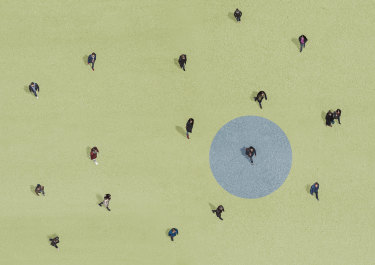
and the police think they will control the spread of the
virus, all they need to do is look at the people walking
around the streets of Northcote to see that hardly anyone was
taking any notice of the directive to keep the spaces between
people as recommended by the health experts.
We are in the most
vulnerable age group and only go out when we have to visit
doctors or hospitals, other than short walks around where we
live for some exercise, but if anyone walking the streets of
Northcote has the virus and either of us catch it, we will be
goners for sure!
Mannie De Saxe
(while I am still around!)
Letter in The Age today 30 June 2020:
No wonder the numbers are climbing
I agree with Mannie De Saxe (Letters, 25/6) that social
distancing in Northcote is rarely being observed.
We have been abused for asking people on the streets to observe
the rules, while others flip the bird or even yell "What are you
going to do about it?" No wonder numbers of cases of coronavirus
are climbing.
The
only way I can see that attitudes will change is a more visible
police presence on foot along High Street and surrounding
streets.
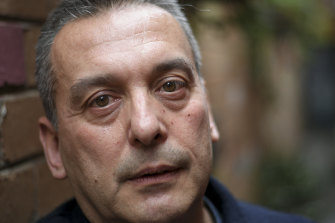
Were so many of us wrong? Christos Tsiolkas on the new uncertainty
In times of uncertainty, you deserve understanding.
He who has not lived in the years before the revolution cannot know what the sweetness of living is. – Talleyrand
We
are on day six of our self-isolation. Has it been less than a week
since we caught the flight from London to Dubai, then Dubai to
Melbourne? The COVID-19 virus has done many things, the most daunting
and terrible being the lives that it has taken, but one of its
aftershocks that has surprised me most is the alteration it has caused
to our sense of time.
Christos Tsiolkas: ''I know, in my gut now, that Melbourne, that Australia, is home.''Credit:Eddie JimThree
weeks ago, we landed in Britain and though we joked and bantered about
touching elbows rather than kissing, we did hug and embrace friends, we
went out to dinners and we got drunk and sat shivering around outside
heaters, shoulder to shoulder, in the freezing English spring night. Day
by day, however, the anxiety and fears grew.
Throughout the first week, and then into the second, I receive constant emails from
home announcing that first this festival and then another would be
cancelled. On a train to Glasgow, preparing my reading for an event, my
phone vibrates and a text informs me that the AyeWrite Festival has also
been cancelled. By the third day in Scotland, reading the escalating
warnings on the internet, my partner, Wayne, and I make the decision to
return home.
We
are fortunate. We booked our journey through a travel agent and within
minutes of emailing him, he has got us on a flight departing London in
two days. We know that there are many people not so lucky. The websites
of all the airlines are crashing. The phones are not being answered. All
we want is to return home. That very notion, home, one that I have
questioned and resisted and challenged for so many years; that notion,
too, has been altered by the virus. I know, in my gut now, that
Melbourne, that Australia, is home.
There
is a strange and befuddling moment in Dubai airport. All the world
seems to be there. We are Australians and New Zealanders, Nigerians and
Ghanaians, Pakistani and Bangladeshi, North American and Latin American,
many of us scrolling on phones and laptops and iPads, seeking
information on which borders have been closed, whether we can indeed go
home. Some of us are sitting still and staring out into space, shifting
in those uncomfortable vinyl chairs, trying to not touch and not to
breathe on one another.
I am two seats away from a young woman,
poised and elegantly dressed, her hair hidden under a rainbow-coloured
turban. She is speaking on her phone in rapid French. My own French is
weak but I gather she has managed to get on a flight to Lagos and from
Lagos she will do her best to head home. Wherever home may be. “Paris
was strange,” she says into her phone. “Everything was closed,
everything was shut. I’ve never seen it like that.”
And it’s at
that precise moment, overhearing her conversation, looking around me at
the people staring at their screens, that it strikes me how bizarre and
ridiculous it is that we all have only so recently been zig-zagging
around the world, taking this freedom and this movement and this
privilege for granted. It isn’t a moral aversion that I am experiencing.
It isn’t righteousness; it is more a recognition of absurdity. I turn
to Wayne when he comes back from the long wait for the toilets.
“All of this, it’s unnecessary.”
“No, we need to get home, this is serious.”
“No, not that. All this travel, all this movement, that is what is unnecessary.”
''All this travel, all this movement, that is what is unnecessary.''Credit:Getty ImagesOn
returning home, I find a series of emails from Australian literary
festivals and arts organisations bemoaning the deleterious effect of
COVID-19 on the arts sector. I understand and share these fears. I’m one
of the lucky ones, able to support myself from writing. But for most of
my friends, their creative work is subsidised by work in hospitality,
in retail, in the public sector and in non-government welfare
organisations. The abrupt and shocking collapse of the economy has us
all reeling. And has us all frightened. Theatres are no longer putting
on plays and cinemas are shut; book launches and writing classes are
cancelled.
Again,
time has refracted back on itself and the arguments and politics and
conversations we were all so engaged with, so furious and so passionate
about only a few weeks ago, seem ephemeral and unimportant. Unemployment
is now the most pressing issue affecting us all.
It
isn’t an abrupt leap from where we were only yesterday to the dystopian
end-of-times of apocalypse. The in-between will be our lifetime.
Of
course, there is the desire to avoid the getting and the passing on of
the virus. But those images of thousands of desperate souls lining up
outside Centrelink are what has brought the severity of what we are all
undergoing into deepest focus. The people in the queues are clearly
ourselves – how we dress, how we use our mobiles, that negotiation of
both digital and physical space – yet they also are evocative of a past
that we never really imagined we would see again: the echoes of the
Great Depression.
Writers and filmmakers and artists have always
imagined apocalyptic scenarios, and climate change and rising inequality
has made that a central concern of recent speculative art and fiction.
But whether it is the savage and nihilistic violence of Cormac
McCarthy’s The Road, or the scenes of zombie rampage and
annihilating natural disasters that have proliferated in popular cinema,
what we hadn’t conceived was the moment of in-between. I think this is
why the dole queues are particularly frightening. They remind us that it
isn’t an abrupt leap from where we were only yesterday – blithely
assuming that the future would be ever-progressive and ever-prosperous –
to the dystopian end-of-times of apocalypse. The in-between will take
years. The in-between will be our lifetime.
So I worry for my
friends who are writers and artists and playwrights and filmmakers. But I
am equally worried for my friends who are nurses and couriers and
administrators and teachers. All those differences we were extolling and
idolising only a few weeks ago, they don’t matter much any more. In
this moment, community trumps difference.
In
between the pinging emails announcing the cancellation of one more
writers’ festival and one more play, there have also been links to
performances and artwork that people are creating online. There is
indeed something exhilarating and defiant in the determination of the
artist to keep making work. It might be my age or merely my disposition
but I also sense something melancholy in the production of such work. A
chamber orchestra plays in an vacant auditorium, a drag artist mimes in
front of a DJ in an empty room. What is missing, and what is wretched,
is that without the physical bodies of an audience, the work seems mere
rehearsal. It is not unlike the few minutes of an AFL match I watched
played without a crowd. The emptiness was deafening. I switched off the
game. Guiltily, I switched off the music.
In some ways, I have
been surprised by how much I have enjoyed this period of enforced
isolation. In saying that, I know that I am fortunate. That I have a
partner, a lovely home and shelves stacked with books and with LPs and
with DVDs. We have friends and family and neighbours who make sure there
is food on our doorstep and wine in our fridge.
I’m
not a complete Luddite: YouTube and streaming have also kept me
company. Yet it is the pleasures of the analogue world that have been
the most satisfying and the most sustaining. I am halfway through a
wonderful book, Jean-Michel Guenassia’s The Incorrigible Optimists Club,
a tender requiem for the generation of eastern European dissidents who
fled totalitarianism and wound up lost and exiled in Paris. It has been
sitting by my bed for nearly two years now.
This morning, I was dancing to Hiperasia,
a cheerfully inventive album by the Spanish electronica artist, El
Guincho. As with the Guenassia novel, I’ve had it for some time. Only
now do I give it a proper listen. Refracted through the changes brought
about by the virus, the recent past seems an aeon ago. All the same, it
has made me thankful for the present moment. Real time. The time of
minutes and hours. The time of patience and reflection.
I
miss people. Wayne and I discuss the progression of the virus, the
responses globally and locally, the uncertain future that is coming. We
both miss other voices, other perspectives, the opportunity to have
one’s argument contested and opposed. Of course, this is possible online
but Skype crackles and falters, the thin sounds on the other end don’t
have the resonance of the human voice. Digital communication also
exacerbates the limitations and prejudices of only speaking to those who
think the same way you do.
There will come a time when we can
return to the world, when social distancing will be the past. But there
will be a ruined economy and there will be fractured communities. It is
inevitable that this ruin and this fracturing will be part of the
writing and the art that is to come. Every day, I wander the hall, the
rooms of our house, I walk into the garden and tell myself I should
write. But all my ideas seem paltry and inadequate. It is a cliche, and
also a truth, that writing is a solitary labour. It is only now,
physically separated from friends and colleagues, that I realise how
much sustenance and inspiration I receive from their insights, their
conversation and their argument. A room of one’s own is a necessity. It
is not enough. These are the conversations that I want to have.
So
many of us writers are progressive and left-wing, feminist and
anti-racist. In one sense, the virus and its consequences have been a
validation. Our coalition government, who for so many years rubbished
the stimulus choices of the Rudd Labor government during the Global
Financial Crisis, is now legislating for the state to commandeer and
protect the economy. The tenets of economic liberalism that have
dominated the globe for more than 50 years have been smashed by the
urgency and virulence of this virus.
Yet there is another
canonical ideal of liberalism that has also been demolished by the
recent weeks, and that is the belief in open borders. While we waited to
get out of Europe, country after country closed itself off from the
rest of the world. In this sense, the virus and its consequences have
validated the conservative voices that defend the nation state. It is
not transglobal entities that are doing the work of looking after
communities. It is the nation state. Were so many of us wrong? Were we
shouting over people when maybe we should have been listening? Had we
assumed racism and xenophobia whenever we heard an argument that
challenged our beliefs? Had we forsaken questioning for certainty? And
if so, what does that mean for the fiction we’ve been writing and the
arguments we have been mounting?
I
worry about the overreach of state power in the responses to the virus.
They are necessary, they are medically and scientifically sanctioned,
but the powers of surveillance and control now being deployed are deeply
illiberal. And once enacted such powers may be difficult to reverse. I
am shocked at how little weight the notion of liberty seems to have
among my peers. A formative political awakening for me was the politics
of AIDS. Some of the finest writing and the best art of the 1980s came
out of provocation and resistance at the demonisation, and the attempts
of state control, over people’s bodies. That suspicion of the state – of
its courts and judiciary, of its police and its military, of its
bureaucracy and of its power – seems to be a matter of little concern to
a present generation of writers and artists.
An equal shock has
been the relative silence over the actions of the Communist Party of
China. Other governments have made mistakes or have had to backtrack on
initial responses but it has been the CPC that has been the most
appalling actor in this short history of COVID-19; in its initial
recklessness in turning a blind eye to the conditions that allowed for
its incubation, and in the terrifying repression it has visited on its
own citizens.
I
worry that we writers and artists have been woefully undergraduate in
our rage over the past decade, tilting at the same bloody windmills. And
maybe our understanding of history has been equally pitiful. The
greatest gift reading history has done, is make me suspicious of
certainty. Maybe that’s the conversation I’m really hankering to have.
After the past few months, after these transformations, can a writer
still adhere to certainty?
When we emerge out of our isolation,
the world will be smaller and our horizons will be local. The priority
will be solidarity and communion with the unemployed; everything else is
not unimportant, but everything else will be secondary.
I
also hope we emerge hungry for argument and conversation and debate. I
hope our writing and our art asks more questions and doesn’t pretend to
have all the answers.
Umsebenzi Online, Volume 19, Number 7, 23 March 2020
Voice of the South African Working Class
In this Issue:
Sasol should be socialised!
Introduction
The
Government Employees Pension Fund (GEPF) and Industrial Development
Corporation (IDC) lost in total more than R200 billion in this month’s
crash of Sasol, reported the Business Report on 15 March 2020. The GEPF
is managed, as an investment fund, by the Public Investment Corporation
(PIC), while the IDC is a state development finance institution (DFI).
The combined loss of workers and public funds occurred through 13.5% and
8.5% stakes held in Sasol by the GEPF and the IDC respectively. The
landslide loss did not occur at Eskom or any SOE – it occurred, on the
contrary, in a privatised company.
The
silence of the private profit sector, its business associations and
political and ideological agents, such as the DA, “expert” or “analyst”
“notice me” and hangers-on, is deafening. The sycophantic supporters of
privatisation are instead calling for more privatisation, divestment of
the state in SOEs, and other neoliberal measures. The working class has
to unite in defence of public property rights and for the SOEs to be
turned around to thrive. Below the excerpt of the editorial from the
forthcoming African Communist (Issue 202, 1st & 2nd Quarter 2020) deals with the failure of the privatised company, the crash of Sasol, and the way forward, socialisation!
Umsebenzi Online
Sasol should be socialised!
African Communist editorial | Red Alert |
In
just one single day in mid-March this year, Sasol lost 45,6% of its
share price, with R76-billion of shareholder equity being wiped out in
one week. In an attempt to reassure its shareholders, creditors and the
markets more generally, Sasol put out a statement valuing its
underlying assets at R23,3-billion. That’s no small sum, but it
represents a huge collapse in value for this synthetic fuel company that
was worth more than R400-billion just six years ago.
The
immediate cause of the mid-March collapse was the impact of the
Covid-19 pandemic on global oil demand and the stand-off between two of
the world’s major oil producers, Saudi Arabia and Russia. The oil price
dropped to around $US35 a barrel. This is close to what the SACP (and
others) have long assumed to be the cost to Sasol of producing oil from
coal – a cost which, until now, Sasol has kept a closely guarded secret
for reasons we will elaborate below.
But
behind Sasol’s March 2020 troubles lies another story, and behind that
story lies yet another. Before the advent of Covid-19 and the oil price
collapse, Sasol was already in major trouble.
But let’s first travel back 14 years.
In
February 2006 the SACP Central Committee put out a statement welcoming
then Minister of Finance Trevor Manuel’s announcement that he was
setting up a task team to investigate the possibility of imposing a
windfall tax on Sasol. The announcement was, in principle, an important
step forward in the campaign that the SACP had been leading for some
years for the socialisation of Sasol and its huge accumulation of
profits.
Sasol
was established in 1950 as a public entity. It was subsidised from the
fiscus for many years to cover the difference between the global price
of oil which hovered around $25 a barrel and Sasol’s cost to produce oil
from coal (which we long assumed to be around $35). This arrangement
was a key part of the strategic intervention of the apartheid regime to
ensure that South Africa’s industrial development was not entirely at
the mercy of external oil producers (and later, of course, oil
sanctions). This strategic intervention was successful. Today Sasol
still supplies around 35% of South Africa’s petrol needs.
Following
the global oil price shock of 1973, in which OPEC countries
collectively combined to limit production and drive up the global price,
oil prices soared. Sasol became immensely profitable as it sold (as it
still does) its oil on the South African market at the same price as
imported oil. In 1979 Sasol was privatised and sold at a discount to
established South African monopoly capital.
But
through the 1980s and 1990s and 2000s the global price of oil,
sometimes moving above $100 a barrel, was way above Sasol’s production
cost. Over many decades, the South African economy and general public,
not just car owners, but taxi and bus commuters, farmers using tractors
and food transporters have been subsiding mega-profits for Sasol’s
private share-holders – paying at the pump for Sasol petrol as if it
were imported all the way from the Middle East.
It
is in this context that the SACP has called for the return of Sasol to
public ownership and, as a first step, for a variable “windfall tax” to
be imposed on Sasol for any time the global oil price tracks
significantly above the $35 a barrel – the amount that we believed was
the cost to Sasol for producing oil from coal. We also argued that this
windfall tax could be the basis of a South African sovereign wealth
fund.
So,
in 2006 as the oil price hovered around $60, the central committee
welcomed Trevor Manuel’s announcement that he was finally establishing a
task team to look at the windfall tax proposal. Sasol’s executives went
ballistic. “The company is concerned that its ability to reinvest
profits into its operations will be compromised if a windfall tax is
imposed,” it proclaimed. Sasol CEO at the time, Pat Davies, made veiled
threats about “re-thinking” its local investment plans.
To
its credit, in 2007 Manuel’s task team, after detailed consideration,
brushed aside this howling and strongly recommended a windfall tax on
Sasol.
Instead,
however, and inexplicably Treasury reached a “gentleman’s” agreement
with Sasol – in exchange for not imposing the windfall tax, the company
committed to investing some of its mega-profits in a new coal-to-oil
plant in Limpopo (the so-called Mafutha project).
In
2012, with the global oil price around $120 a barrel, Sasol’s net
profit for the year was R24-billion, but there was still no Mafutha!
Then in 2013, Sasol announced a R200-billion investment in a gas to
liquid plant, not in Limpopo, but in faraway Louisiana, USA.
Even the conservative Business Day journalist
David Gleason was outraged: “Born courtesy of taxpayers…South Africa’s
biggest company and world leader in various critical energy
technologies is investing ever more deeply in the US than it is here.
This may be the right thing for the company, but is it right for the
country?”
Gleason
was right, but he was also wrong – the decision to disinvest massively
into the US has now proven to be a disaster for Sasol and its
shareholders. The Louisiana project has run years over schedule and
billions over budget. Sasol’s debt has ballooned and creditors are
nervous. Before the Covid-19 outbreak, before the oil price collapse,
Sasolwas
in trouble. It joins a list of former pillars of the apartheid economy
that disinvested out of South Africa and that have now run into
trouble. Old Mutual burnt its fingers in London, Anglo American is a
pale shadow of its past, SA Breweries got eaten up, Woolworths is
limping from its Australian ventures.
And
now to add further insult to our injury, Sasol has put out a statement
reassuring its creditors and investors that even at $28 a barrel, the
company can cut it. The blighters! All these years they have kept their
cost of producing oil from coal a deep secret, disguising from the South
African public the actual amount we have been subsidising mega profits
over decades.
The
wealth and world-class technical capacities of Sasol need to be
socialised and harnessed for the overall development of our country. A
windfall tax in 2007 would have been an important step forward in that
direction. The task of socialisation has become a whole lot more
complex, but no less critical.
This is an excerpt of the editorial from the forthcoming African Communist, Issue Number 202, 1st & 2nd Quarter 2020
Comparing the government responses to #Covid19 under Ramaphosa and #HIV under Mbeki
By Mia Malan for the Bhekisisa Centre for Health Journalism• 25 March 2020
Thabo Mbeki and Cyril Ramaphosa. Photo composite supplied by Bhekisisa
Reporting on Covid-19 and HIV in South Africa is like night and day, says a writer who has reported on both epidemics.
It’s
the day after the plane containing our repatriates from Wuhan has
landed, when Cyril Ramaphosa declares a National State of Disaster in
the country, in front of a blaring television in my lounge, when it hits
me: Nowhere am I able to see a single activist venting vociferously
against the government.
No Zackie Achmats, Fatima Hassans,
Vuyiseka Dubulas, Edwin Camerons or Mark Heywoods standing firmly at the
ready to contradict the President. No demonstrators spread-eagled
across burning tar, playing dead alongside placards pleading for
medicine and for the state to use evidence-based strategies to combat an
epidemic.
No health minister screeching
“Traitors!” at scientists and journalists who disagree with her denial
of science and her refusal to provide people with life-saving treatment.
No pontifications about potatoes,
beetroot, lemon and garlic as excellent means to protect people from a
potentially fatal virus.
Instead we have a president taking
responsibility, surrounded by his sober Cabinet, announcing: “It is up
to us to determine how long [this epidemic] will last, how damaging it
will be and how long it will take our economy and our country to
recover.”
An Aids epidemic did not exist, the duo insisted
I was a young reporter when former
President Thabo Mbeki and his Health Minister, Manto Tshabalala-Msimang,
shocked the world when they denied the link between HIV and Aids.
The virus, they argued, was not the
cause of Aids. An Aids epidemic did not, in fact, exist, the duo
insisted; it was all down to poverty. They also posited a range of
conspiracy theories, including that HIV was manufactured in a lab
somewhere in the West.
It was a truly tumultuous point in the history of our then young democracy. If you were a dedicated health
journalist during the late 1990s or early 2000s, you were basically a
full-time Aids reporter. You spent your workdays recording Mbeki’s and
Tshabalala-Msimang’s quackish HIV statements, which you then took to
credible scientists and activists to correct by way of contradictory
comments.
That, of course, was, if you DID disagree with the government.
But there were some in the media who
either agreed with the president and the health minister, or could not
muster the courage to oppose them. It was all about politics, and power.
HIV had become a political football,
and with political leaders suggesting that a condition, which was
killing hundreds of thousands, was simultaneously a hoax and something
that had been manufactured by a demonic pharmaceutical industry, the
issue transcended the realm of health. That meant that political and
business journalists, also often editors-in-chief, joined the debate – and they chose sides that were mostly determined by politics, not science.
There was confusion all round, with mixed messages the order of the day. I know this to be so, because I
worked for the state broadcaster at the time, and the South African
Broadcasting Corporation was a fierce supporter of the Mbeki government.
Like many of my colleagues, I had to fight to get my stories, which
more often than not presented opinions and facts that contradicted the
president, aired. Against the background of South Africa’s hard-fought-for young democracy at the time, disagreement with the president – and in essence taking the side of Western science – about the cause of a condition that was destroying the country, was frequently viewed as anti-democratic and even racist.
So, journalists, scientists and
activists who opposed HIV quackery were “anti-Mbeki people”, not just
mere supporters of science.
We were the enemy.
‘Shut up and listen!’
At the first International Aids
Conference that was held on South African soil, in 2000, in Durban, the
animosity was on open display amid the grandeur of the five-star Hilton
Hotel, when the health minister reprimanded two world-renowned HIV
scientists whose research appeared regularly in prestigious
peer-reviewed scientific journals.
Tshabalala-Msimang ordered Salim
Abdool Karim, now the head of the Centre for the Aids Programme of
Research, Caprisa, and Hoosen Coovadia, then from the University of
Kwazulu-Natal, to a luxury room where she chastised them in front of
Health MECs and other politicians.
Both were respected health activists who had fought for equal access to healthcare for all races during apartheid.
“You’re disloyal! Traitors!” Abdool
Karim remembers her screaming at them. “What you are doing is equal to
treason to our country!”
Their sin was that they had been
publicly defending HIV as the cause of Aids and advocating for access to
antiretroviral treatment (labelled “poisonous” by Tshabalala-Msimang)
for HIV-positive South Africans.
But when the two scientists tried to
defend themselves, Abdool Karim recalls, Thabalala-Msimang interrupted
them and yelled: “Shut up and listen!”
HIV stories – and scientists themselves – were filled with conflict
Twenty years later, after a decade of State Capture, and on the brink of another epidemic – Covid-19 – Abdool Karim received a call from the current health minister, Zweli Mkhize.
Mkhize was seeking advice, asking the
scientist: “How do you think we can slow the spread” of the new
coronavirus, known as SARS-Cov-2.
Says Abdool Karim: “With the
coronavirus, our experience with government is exactly the opposite [of
what we endured during the Mbeki and Tshabalala-Msimang era]. The
minister has been contacting us, he wants to involve us, he is seeking
the opposite of what Mbeki and Tshabalala-Msimang wanted.”
Abool Karim serves on a special
Covid-19 committee. It advises the president on what actions to take.
“With HIV we were so slack with taking things up, we delayed
mother-to-child-prevention of HIV and access to antiretroviral
treatment. But with Covid-19 we’re proactive and we’re acting early,” he
says. The consequences – in the form of more than 300,000 unnecessary HIV-related deaths, according to a Harvard University study – of the time the government took to respond to science, are unfortunately permanent.
As a result of the government’s
contrasting responses, reporting on HIV and Covid-19 in South Africa as a
journalist is like night and day. With one of the epidemics, activists
and scientists were mostly our only sources of information, and the
government the ones who blocked access to data. In the case of HIV,
study after study has shown how conflict – one of the strongest news values –
was a central theme in stories on the subject because of activists and
government being played off against each other; but it often resulted in
stories being repetitive, rather than meaningful.
With Covid-19, those same HIV
activists who fought the government are now supporting and praising
Cyril Ramaphosa’s early, evidence-based interventions. And the health
ministry, which previously cut journalists off, has set up a media
WhatsApp group through which the latest figures, as they become
available, are posted directly to journalists’ phones. The system isn’t
perfect – press releases have been retracted a few times because they contained the wrong figures –
but the point is: there is a system that allows for a free flow of
information. And when mistakes are made, the government has acknowledged
them.
There’s even a data-free website and a
public WhatsApp service that has so far been used by well over 2
million people, according to the health department.
Is the ANC using its great power for good with Covid-19?
And, it seems, the ANC is, at this moment in history, using its great power for good –
for state protection rather than State Capture. When the ANC Youth
League in Limpopo, for instance, threatened the “mother of all marches”
in the province after it was announced that the quarantine site for the
Wuhan repatriates was going to be in the outskirts of Polokwane, Zweli
Mkhize — a powerful man in the ANC — shushed them and crushed their
plans very swiftly. After the Wuhan plane landed he took
to his Twitter handle to post a video branded with an “ANC Limpopo” logo
to welcome the repatriates.
The government has been calling the
media its “partners” in the fight against Covid-19. To the ears of
someone who reported on HIV in South Africa in the 1990s and 2000s, that
has been pretty surreal. I’m sure the “partners” thing has seemed
equally strange to those in the media who’ve been reporting on State
Capture and government corruption.
Okay, enough Kumbaya for now: As a
journalist and editor, I of course am well aware of how rapidly this
newfound “partnership” could end. But for now, it’s happening. We’re all
in it together, on the same side. For now, I’m witnessing true
leadership from the ANC.
We can’t stop this virus from spreading, but we can slow down the pace at which it spreads, to help our health system cope.
We’re moving into lockdown, testing
sites are increasing, there are contact tracing teams, quarantine
sites-in-the-making and relatively good communication systems that will
hopefully prevent panic.
Yet, sadly, the ANC government’s
criminal inaction two decades ago is likely to have a bearing on South
Africa’s ability to combat Covid-19 successfully: We now have one of the
highest HIV infection rates in the world, something that could have
been prevented if we had put people on treatment earlier.
Our latest household survey shows
that four out of 10 people with HIV are still not on treatment, which
increases the chances that their immune systems are weak and potentially
vulnerable to attacks from viruses such as SARS-CoV-2. Lessons don’t emerge only from other
countries. With regards to Covid-19 and our response in the coming weeks
and months and maybe even years, our own history just may be our
greatest teacher. DM
Kendall Lovett submitted this letter to The Age - INDEPENDENT - ALWAYS - under the heading "NBN needs to help us working from home" and The Age letters editor decided that he/she knew best. The Age letter appears below the original letter.
To: Letters Editor, The Age,
From: Kendall Lovett, (address and phone number provided)
The COVID-19 (Coronavirus) has highlighted the need for an
NBN that is adequately equipped to facilitate telehealth,
tele-education and teleworking.
We need a better digital network for the current crisis --the
pandemic as well as the floods and bush fires which preceded
it.
According to Laurie Patton, former Internet Australia
executive director, the federal government should immediately
fund the NBN company to employ suitably qualified people being
retrenched, train them and deploy them to start upgrading the
FTTN (copper wire) connections so that everyone has access to
fast broadband.
That would be a step in the right direction now and help
working people at home during the pandemic while fixing an
underlying flaw that limits the effectiveness of the NBN.
Signed: Kendall Lovett.
-----------------------------------
Better network priority
COVID-19
has highlighted the need for an NBN that is adequately equipped to
facilitate telehealth, tele-education and teleworking.
We need a better digital network for the crisis – the pandemic as well as the floods and bushfires which preceded it.
According
to Laurie Patton, former Internet Australia executive director, the
federal government should immediately fund the NBN company to employ
suitably qualified people being retrenched, train them and deploy them
to start upgrading the FTTN (copper wire) connections so that everyone
has access to fast broadband.