26 December 2019

MEDICAL OPINION, TORTURE AND JULIAN ASSANGE


Medical Opinion, Torture and Julian Assange


On November 27 this year, UN Special Rapporteur on Torture, Nils Melzer, delivered an address to the German Bundestag outlining his approach to understanding the mental health of WikiLeaks founder Julian Assange. These comprised two parts, the initial stage covering his diplomatic asylum in the Ecuadorean embassy, the second dealing with his formal detention in the United Kingdom at the hands of the UK legal and judicial system. The conclusion was a recapitulation of previous findings: that Assange has been subjected to a prolonged, state-sponsored effort in torture, nothing less than a targeting of his being.
Melzer’s address is an expansive portrait of incremental inter-state torment that led to Assange’s confinement “in a highly controlled environment within the Ecuadorean embassy for more than six years.” There was the eventually justified fear that he would be sought by the United States in extradition proceedings. The Swedish authorities threw in their muddled lot between 2010 and 2019, attempting to nab Assange for rape claims despite “not being able to produce enough evidence for an indictment, and which now, after almost a decade, has been silently closed for the third time based on precisely that recognition.”

Then came the British contribution, consisting of encouragement to the Swedes by the Crown Prosecution Service that the investigation should not be closed, inspiring them not to get “cold feet”. (The cold feet eventually came.) The Ecuadorean contribution completed the four-piece set, with the coming to power of a pro-Washington Lenín Moreno. Embassy personnel in London were encouraged to make conditions that less pleasant; surveillance operations were conducted on Assange’s guests and meetings.

Melzer, along with a medical team, attended to Assange on May 9, 2019 in Belmarsh, finding a man with “all the symptoms that are typical of persons having been exposed to psychological torture for a prolonged period of time.” There was little doubt, in Melzer’s mind, that symptoms “already measurable physically, neurologically and cognitively”, had been shown.

These calls went unheeded. Melzer, in early November, accused the UK authorities of showing “outright contempt for Mr Assange’s rights and integrity.” Despite warnings issued by the rapporteur, “the UK has not undertaken any measures of investigation, prevention and redress required under international law.” Melzer’s prognosis was bleak. “Unless the UK urgently changes course and alleviates his inhumane situation, Mr Assange’s continued exposure to arbitrariness and abuse may soon end up costing his life.”

This point has been restated by Dr. Stephen Frost, a chief figure of the dedicated outfit calling itself Doctors for Assange. “We repeat that it is impossible to assess adequately let alone treat Mr Assange in Belmarsh prison and that he must as a matter of urgency be moved to a university teaching hospital. When will the UK government listen to us?”

The medical degrading of Assange has assumed ever greater importance, suggesting unwavering state complicity. On November 22, over 65 notable medical doctors sent the UK Home Secretary a note based on Melzer’s November 1 findings and Assange’s state at the October 21 case management hearing at Westminster Magistrates Court. “It is our opinion that Mr Assange requires urgent expert medical assessment of both his physical and psychological state of health. Any medical treatment indicated should be administered in a properly equipped and expertly staffed university teaching hospital (tertiary care).”

In a second open letter to the UK Lord Chancellor and Secretary of State for Justice dated December 4, the Doctors for Assange collective warned that the UK’s “refusal to take the required measures to protect Mr Assange’s rights, health and dignity appears [to] be reckless at best and deliberate at worst and, in both cases, unlawfully and unnecessarily exposes Mr Assange to potentially irreversible risks.”

The same grounds were reiterated in a December 16 letter to Australian Foreign Minister Marise Payne, with a curt reminder that she had “an undeniable legal obligation to protect your citizen against the abuse of his fundamental rights, stemming from US efforts to extradite Mr Assange for journalism and publishing that exposed US war crimes.” In the event that Payne took no action on the matter, “people would want to know what you […] did to prevent his death.”

In the addendum to the open letter, further to reiterating the precarious state of Assange’s health and medical status as a torture victim, the doctors elaborate on the circular cruelty facing the publisher. An individual deemed “a victim of psychological torture cannot be adequately medically treated while continuing to be held under the very conditions constituting psychological torture, as is currently the case for Julian Assange.” Appropriate medical treatment was hardly possible through a prison hospital ward.

A lesson in understanding mental torture is also proffered. “Contrary to popular misconception, the injuries caused by psychological torture are real and extremely serious. The term psychological torture is not a synonym for mere hardship, suffering or distress.”

At Assange’s case management hearing on December 19, restrictions on medical opinion were again implemented; psychiatrist Marco Chiesa and psychologist David Morgan were prevented from attending. Both had been signatories to the spray of open letters. According to Morgan, he had hoped to “provide some observations about Julian Assange’s health, psychologically, and with my colleagues, physically.” Instead, it transpired that access was denied, according to psychologist Lissa Johnson, “despite members of the public offering to give up seats for them.”

Cold-shouldering expert opinion can be counted as one of the weapons of the state in punishing whistleblowers and publishers. The State has always made it a bureaucratic imperative to sift the undesirable evidence from the apologetic message. Accepting Assange’s condition would be tantamount to admission on the part of UK authorities, urged on by the United States, that intolerable, potentially martyring treatment, has been meted out to a publisher.

More articles by:
Binoy Kampmark was a Commonwealth Scholar at Selwyn College, Cambridge. He lectures at RMIT University, Melbourne. Email: bkampmark@gmail.com

24 December 2019

CORBYN TRAGEDY - THE UK LABOUR PARTY IS ITS OWN WORST ENEMY

Before starting on the problems confronted by Jeremy Corbyn, it may be a good idea to start with what is wrong with much of most countries around the world.

After the second world war and after the Nazis and the USSR decimated the Jewish populations of Europe, the zionists fought to build a so-called Jewish state in Palestine and with their so-called success the Zionists occupied much of Palestine and have decimated the Palestinians with a slow genocide which has continued from the late 1940s to today when we are about to enter 2020.

As a consequence of Israeli apartheid and police state actions, they have brutally suppressed the Palestinins living in the Gaza strip and West Bank of Palestine and the Israelis are occupying more and more of Palestinian territory until they will eventually occupy the whole of Palestine.

There are many of us around the world who are Jewish and are ant-zionists.

One of the international ploys used by the Israeli government is to equate anti-zionism with anti-semitism, and there has been a marked increase everywhere with actions perpetrated by ultra right wing groups who are fascists or semi-fascists and whose actions are not very different from groups around Europe and elsewhere, such as South Africa 70 or 80 years ago. They are using the worst possible ploys to spread anti-semitic actions everywhere.

Now we come back to the UK and the recent election which saw Jeremy Corbyn defeated and Boris Johnson elected.

It has been a well-known fact that ever since Corbyn was elected to head the Labour Party in the UK, forces have been at play to paint him as an anti-semite and to paint much of the Labour Party as anti-semitic.

There are groups within the Labour Party who have sub-groups which are supporters of zionist Israel and have stated that Corbyn, because he has supported the Palestinians, is therefore anti-semitic and will make difficulties for the Jews of the UK.

The reality of course is that most of the Tory Party and many in the Labour Party are anti-semitic and were doing everything in their power to destroy Corbyn, whose policies in general were being too left-wing for the conservatives throughout the UK.

As a consequence of the above, the Labour Party destroyed itself back to Blairism and decimated Labour in the UK parliament.

20 December 2019

BDS = BOYCOTT DIVESTMENT SANCTIONS

Boycott, Divestment,Sanctions - BDS - these were amongst the most useful tools in bringing down the South African apartheid police state in 1994.

South Africa saw the installation of that country's first black president in 1994 after a few hundred years of apartheid, and unfortunately much of South Africa's governance has gone downhill since Mandela retired in 1999.

Corruption, mismanagement, managerial appointment inadequacies, and ineptness, many of South Africa's problems in the year 2020 will have been because of unsatisfactory mis-direction. With all its problems, the country's post-apartheid constitution is one of the most progressive in the western world, and gives hope for the country to be able to progress beyond the disasters of the past 20 years.

So many other parts of the world have disastrous governments, or dictators or corrupt politicians that BDS could well be applied to them to help bring about change. Israel's apartheid military control over Palestine and the Palestinians has seen the Palestinians endeavours to obtain help from the rest of the world with BDS as their most useful tool to date.

Now contemplate if BDS were used against 3 of those who are Israel's greatest supporters in maintaining the illegal occupation of Palestine by the Israelis - the UK, the USA and Australia - or to put it another way - Boris, Donald, Scott, or BDS.

David Everett (1770-1813) wrote:

"Large streams from little fountains flow,
Tall oaks from little acorns grow (Lines written for a School Declamation)"

This is how to bring about change in countries around the world.

17 December 2019

CENSORSHIP IN AUSTRALIA - KAFKA DOWN UNDER: THE THREAT TO WHISTLEBLOWERS AND PRESS FREEDOM IN AUSTRALIA


Kafka Down Under: the Threat to Whistleblowers and Press Freedom in Australia


It was the head of the Australian Cyber Security Centre who finally admitted before an Australian Parliament committee that she had unilaterally directed and pressured CyberCon to drop myself and an academic research professor (an Australian citizen) from the University of Melbourne as speakers.

I viewed the extraordinary pressure exerted by the Australian Cyber Security Centre to block me as an already-accepted speaker — a week before the start of a high visibility public interest conference on cybersecurity — as a most alarming and Orwellian development and a distinct form of brazen censorship for the express purpose of outright silencing me.

The head of the ACSC misled the committee when she said the reason she wanted my talk canned was because of a proposal for me to participate on a panel with Edward Snowden that never went forward.

It appears she dissembled and used the apparent floating of the idea of a proposed Edward Snowden panel (for which I had NO prior knowledge whatsoever) as a convenient foil and cover to justify and excuse the barring of me as a speaker from CyberCon with the very heavy hand of her “higher authority” as the head of the ACSC over the conference organizers (Australian Information Security Association).

In addition, the reason she gave before the committee is not the reason given to me when I formally followed up with the AISA organizers.

On 29 September (4 days before I departed the United States), I received an e-mail message to contact the Board Director for AISA “as a matter of urgency.”
In a subsequent phone call from the same AISA Board Director, I was told that I was no longer a speaker on the conference agenda, but I could still attend the conference as a delegate and that they (AISA) would honor the flight and accommodations arranged for me many months early.

I followed up formally and asked for the specific reason I was dropped as a speaker from CyberCon. I was informed on 7 October, in an e-mail from the Board Director of AISA, that “AISA works with a conference partner in respect of CyberCon. Our conference partner has determined your presentation is incongruent with the conference.”

Furthermore, this egregious canning of me as a speaker fed right into the current debate in Australia about press freedom and whistleblowing laws because their public interest disclosure process (their legal way for public servants to blow the whistle) has been described as “impenetrable” by their Federal Court.

The current debate in Australia regarding press freedom and whistleblowing laws strikes at the heart of any country claiming it is a democracy.

The recent raids by the Australian government against major media outlets and whistleblowers have broken open the tension — between openness and transparency versus secrecy and closed-door government too often hiding itself (and its actions) away from accountability and the public interest.

Something has to give. The debate centers on the public interest knowing what the government is doing behind closed doors and often in secret in the name of — and under the veil and banner of — national security.

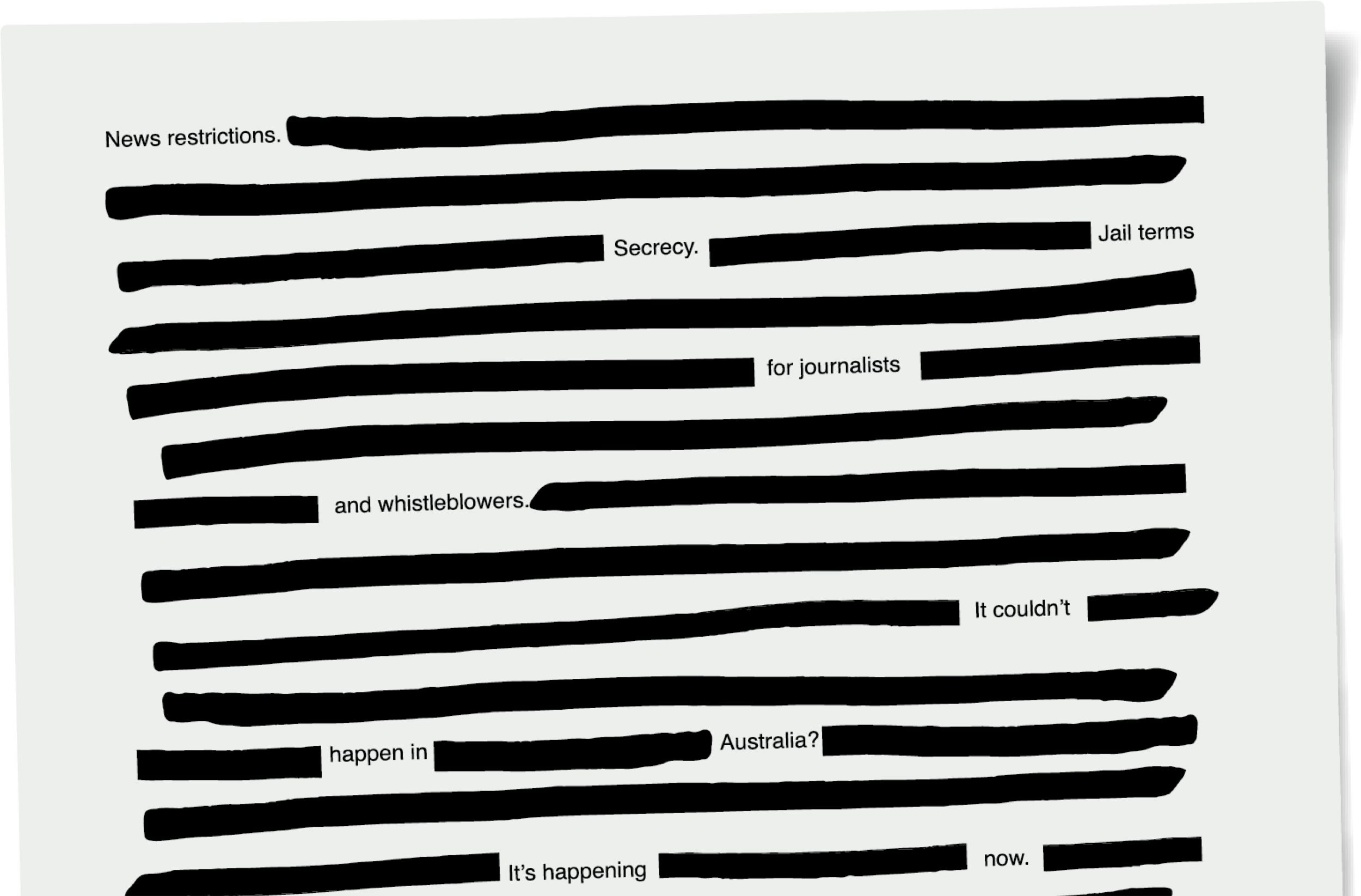
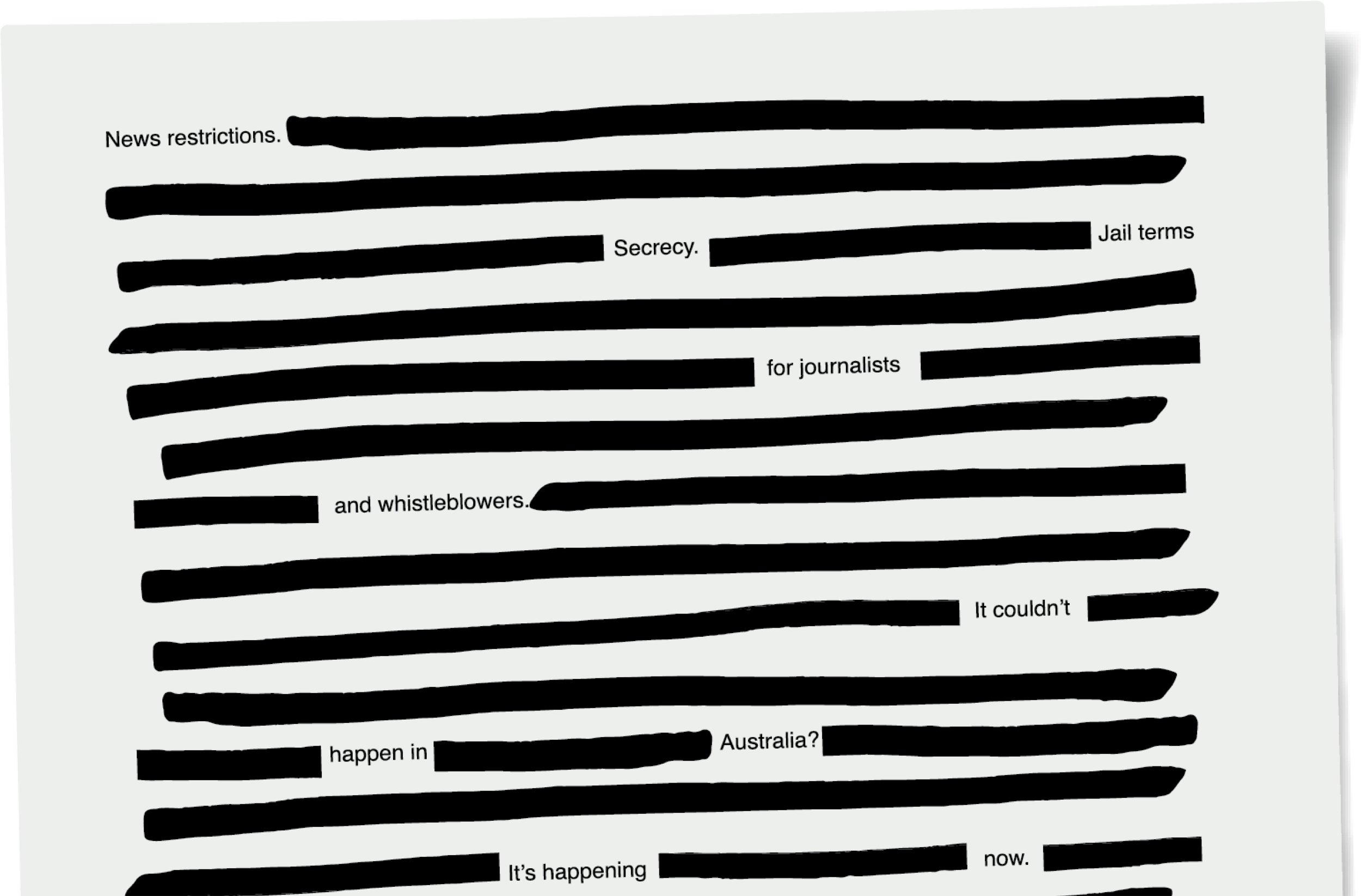
The dramatic 21 October Right to Know campaign — with the redacted front pages on all major newspapers in Australia as I woke up in Melbourne before returning to the United States that very day — demonstrates beyond the shadows of secrecy, censorship and press suppression that sunshine is the best antidote for a healthy and robust democracy increasingly held hostage by the national security state.

Efforts from on high seek to justify the actions of that national security state under the color of public safety for more and more autocratic powers — while stoking fear and hyping the danger to society — yet going after whistleblowers who disclose actions that clearly rise to the level of wrongdoing, violations of law, coverup and endangering public safety, health and the general welfare.

What is happening in Australia is most concerning to me as fundamental democratic values and principles are increasingly under direct attack around the world from the rise of increasing autocratic tendencies and raw executive authorities bypassing, ignoring and even undermining the rule of law under the exception of national security and government fiat.

Australian public interest disclosure laws are also a mixed bag — a conflicted patchwork with huge carve-outs for national security and immigration. Nor do they adequately protect a whistleblower from reprisal, retaliation or retribution.

It is quite clear that not all disclosures (even when done in the public interest) are protected by law in Australia, and the whistleblower is in danger of exposure as a result.

At the federal level, whistleblowers face career suicide for public interest disclosures. And if deemed by the government to be unauthorized disclosures, those disclosures are even considered criminal.

As it happened, my removal as a speaker from CyberCon is the first time I was ever censored anywhere.

The trend lines of increased secrecy around the world by governments does not bode well for societies at large. History is not kind.

What I do see improving is public-interest concern regarding just how far government can or should go. People are discussing what society sacrifices in the name of secrecy and national security when too often the mantra is the ends justifies the means — and government says to just trust us, while secret power is too often unaccountable, even to itself.

The price I paid as a whistleblower was very high. I just about lost it all and came close to losing my liberty and freedom. I was declared indigent by the court, am still in severe debt, have no pension as my career and personal life were turned inside-out and upside-down because the government treated me as a traitor for my whistleblowing on the mass domestic surveillance program that violated the U.S. Constitution. I also exposed 9/11 intelligence failures and subsequent coverup plus massive multibillion-dollar fraud, waste and abuse. The government then turned me into an insider threat and Enemy of the State and prosecuted me as a criminal for allegedly violating the U.S. Espionage Act.

If it is left up to the government to determine what are state secrets, then the government is perversely incentivized to declare as state secrets any disclosures made in the press it does not like. This thinking can only lead to more prosecutions of publishers to protect the State. In the absence of meaningful oversight of the secret side of government, how does the public trust its own government to operate and function in the public interest and not for special or private interests?

But then again, if the press is not doing its job holding government and the public sector to account, why should they be surprised when the public holds even the media in lower regard?

Government should earn the public’s trust and not take it for granted or abuse that trust. The heart of democracy rests on a civil society that it is not undermined by the very government that represents it.

Once the pillars of democracy are eroded away, it is quite difficult to restore them. The misuse of the concept of national security — as the primary grounds to suppress democracy, the press and the voices of whistleblowers speaking truth to and about power — increases authoritarian tendencies in even democratic governments.

The real danger to civil society in Australia is that these same tendencies give rise to extralegal autocratic behavior and state control over the institutions of democratic governance under the blanket of national security with the excuse of protecting the state.

As I continue with this work as chair of the Whistleblowers Public Education Campaign, I’m mindful that my efforts are only possible because of support from so many concerned people.

Thomas Drake is an NSA whistleblower who chairs the Whistleblowers Public Education Campaign.

More articles by:

16 December 2019

ANTI-WAR ARTWORKS REMOVED IN CENSORSHIP ROW


Anti-war artworks removed in censorship row

An internationally renowned Australian artist whose anti-war works were removed from a gallery has accused conservative politicians of misrepresenting his art and stoking outrage.

What Nationals MP George Christensen slammed as an attack on the reputation of Australia's armed forces amounted to fair political comment on the emotional cost of war, Sydney artist Abdul Abdullah says.


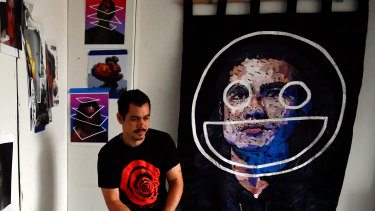
Abdul Abdullah in his St Leonards studio.
Abdul Abdullah in his St Leonards studio.Credit:Sam Mooy

His works were pulled from a Queensland gallery show intended to examine difficult truths around racism, violence, and discrimination.

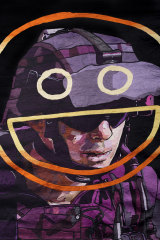
The works featured tapestries of an anonymous soldier overlaid with a smiley face, part of a national touring exhibition of works by nine notable Australian artists.

''In a strange way, it's the voices who rail against political correctness that seem to be the first to want to have politically correct speech  - in their minds - from an artist who comes from a background which they see as violent or threatening," Abdullah said.


"I wonder if I had a different name or a different religion whether this would have been news at all."

Mr Christensen and former NRL player turned councillor, Martin Bella, led calls for the removal of the two works, For we are young and free and All Let us Rejoice, from a council-run gallery. They were joined by the local RSL which said they feared for the mental health of local servicemen and women.
A spokeswoman for Mr Christensen directed the Herald to an October statement in which the member for Dawson said he was all for free speech and freedom of expression but taxpayers and ratepayers should not subsidise political messages that attacked soldiers. Clr Bella did not respond to questions put by the Herald.


For we are young and free' by Abdul Abdullah, which was pulled down from a Queensland art gallery because they were deemed to be an attack on soldiers.
For we are young and free' by Abdul Abdullah, which was pulled down from a Queensland art gallery because they were deemed to be an attack on soldiers. Credit:Äbdul Abdullah
Tensions got so heated that extra gallery security was needed, the artist received hate mail and poppies were dropped at the gallery entrance.

The tapestries bear Abdullah's signature style of an emoji, cartoonish character or motif over a traditionally painted backdrop. This year the artist was a finalist for the Sulman and Wynne prizes for paintings with similar imagery.

"The smiley face is an emoji I've used in a few different series of works where I've talked about the difference between a person's lived experience and the perception of them and what they project - the difference between how we feel and how we seem," Abdullah said from his studio in St Leonards.
"In the case of these images of the soldiers, there's the dark experience of war and all the turmoil they've experienced but in every case where I've met a soldier they've said they've always had to put on a brave face."

Mr Christensen took issue with the artist's description of soldiers as surrogates
involved in "'illiberal, destructive actions in other places'' and that those coming across Australian soldiers in action would see them as an ''existential threat''.
The MP said it was particularly affronting to veterans that the exhibition would have run during Remembrance Day.

After initially defending the artist's right to freedom of expression, Mackay Mayor Greg Williamson announced the work's removal. He declined to respond to the Herald.

Abdullah said he was never asked to explain his intent and he'd be the last person to disrespect servicemen. Two of his great grandfathers fought in Belgium and France in World War I. One grandfather fought in Papua New Guinea in World War II, the other with the British Navy in a submarine torpedoed in the Indian Ocean.
"What’s happened here is so unfair," said Esther Anatolitis, executive director of the National Association of Visual Artists. "It’s deeply unfair to the veterans and veterans’ groups who’ve been misled on work they never saw by an artist they never met."

Following its opening in Noosa Regional Gallery on Friday, the exhibition Violent Salt is scheduled to travel to Toowoomba Regional Art Gallery, but those dates are also in doubt with the mayor Paul Antonio telling local media he did not want Abdullah's works displayed. Staff at Noosa Regional Gallery elected to add kids labels to the interpretation of the touring exhibition including one for Abdullah’s works, and a sign at the entrance with a Lifeline number.
Independent curators Yhonnie Scarce and Claire Watson said that they were surprised and disappointed that Abdullah’s embroideries were taken down from the exhibition in Mackay without consulting with them or the artist.

Censorship of the work, they said, and particularly "hostile remarks" leveled towards Abdullah, only demonstrated the value of exhibitions such as Violent Salt.

The show is scheduled to travel to Lake Macquarie City Art gallery in June, then Canberra Contemporary Art Space and Swan Hill Regional Art Gallery and Bundoora Homestead Art Centre in Victoria.


Linda Morris

24 October 2019

THE DECENT PROTESTER: A DOWN UNDER CREATION


SOUTH AFRICAN APARTHEID POLICE STATE - TO 1994; AUSTRALIAN POLICE STATE - FROM 2014


Australia’s Right to Know is a coalition of Australia’s leading media organisations and industry groups, formed more than a decade ago to protect the Australian public’s right to know. Find out more >

Australia, you're being kept in the dark

You have a right to know what the governments you elect are doing in your name. But in Australia today, the media is prevented from informing you, people who speak out are penalised and journalism that shines a light on matters you deserve to know about is criminalised. This needs to change. 87 per cent of Australians value a free and transparent democracy where the public is kept informed. Sadly, only 37 per cent believe this is happening in Australia today^. Australians have been slowly losing their right to know how their government operates and about issues that affect their families and finances. For the last 20 years, the federal government has been issuing tighter and tighter laws on what information is shared with the public.
Australians have a right to know:
  • which aged care facilities have a history of neglect and abuse when considering where their loved ones are cared for
  • that Australian land is sold to foreign owners and the terms of those deals are kept secret
  • that the government has plans to undertake secret surveillance of Australian citizens
  • that the Australian Tax Office can take money from your account without you knowing

Here’s the evidence

You deserve the truth about decisions, mistakes and wrongdoing that happen behind closed doors. Australians expect that we live in a country where powerful people are held accountable for their actions, and that those who speak out are not punished. The media plays a vital role in telling the public what’s really going on. But journalists and whistleblowers in Australia live in fear of criminal charges, police raids and damaging court battles that threaten their professional careers and personal freedom.

Here are some examples of what governments are hiding from you

Who we are and the change we’re seeking

We’re a coalition of Australia’s leading media organisations and industry groups, formed more than a decade ago to protect the Australian public’s right to know. With two government committees looking into press freedom and issuing recommendations over the coming months about the laws which decide what you get to know and what your government can keep from you. We’re calling for changes to make sure Australia’s laws protect your right to know.
Learn more

What you can do about it

This is about the basic right of every Australian to be properly informed about the important decisions the government is making in their name. So we are calling on Australians to voice their concerns.
Now is the time to tell your government representative to protect your right to know the truth

How we got here

According to independent research, Australian governments have passed around 75 laws related to secrecy and spying over the last two decades. Piece by piece, those laws have chipped away at the public’s right to know the truth.
Get the facts

RED JOS - ACTIVIST KICKS BACKS


Welcome to my blog and let me know what you think about my postings.


My web pages also have a wide range of topics which are added to when possible. Look for them in any search engine under

"RED JOS"


I hope you find items of interest!

Search This Blog

Followers

Blog Archive

Total Pageviews

About Me

My photo
Preston, Melbourne, Victoria, Australia
90 years old, political gay activist, hosting two web sites, one personal: http://www.red-jos.net one shared with my partner, 94-year-old Ken Lovett: http://www.josken.net and also this blog. The blog now has an alphabetical index: http://www.red-jos.net/alpha3.htm

Labels